 Nana Patekar Dies At 75: Here's all about his Rs 80 crore net worth, simple lifestyle and humanitarian work for farmers
 Donald Trump has not decided on fresh strikes on Iran but Pentagon told to prepare: Report
 Nana Patekar passes away: From earning Rs 35 at 13 to becoming one of Indian cinema’s most celebrated actors; a look at his journey
 Veteran actor Nana Patekar passes away, details here
 Dhruv Rathee joins Bengaluru protest against SIR, CJP plans bigger Delhi agitation on October 10| Video
 India squad for New Zealand tour delayed: Why selectors are waiting until next week to pick ODI team
 Virat Kohli–Premanand Maharaj Rs 5 crore row escalates: Dinesh Falahari fires back, demands audit of company accounts
 ICC Rankings: Shreyas Iyer soars to No. 7 in T20Is, KL Rahul gains while Virat Kohli displaced to 3rd in ODIs
 Bhuvneshwar Kumar back in Indian team after 4 years: How past veterans responded to T20I comebacks
 Can Sourav Ganguly coach Delhi Capitals while heading CAB? Former BCCI boss responds to big controversyNana Patekar Dies At 75: Here's all about his Rs 80 crore net worth, simple lifestyle and humanitarian work for farmersNana Patekar passes away: From earning Rs 35 at 13 to becoming one of Indian cinema’s most celebrated actors; a look at his journeyVeteran actor Nana Patekar passes away, details here
 Drishyam 3 box office collection Day 6: Despite minor drop, Ajay Devgn earns his biggest hit, beats Tanhaji, earns over Rs 350 crore
 Jailer 2: CBFC rating, runtime revealed, bad news for Rajinikanth fans, his latest film isn't suitable for...
 Flydubai Flight News:'Revenge For Gaza'; Flydubai Co-Pilot Hamam Al-Hammami Confesses To Terror Plot
 Delhi Building Collapse: 5-Storey Building Collapses In Seemapuri; Emergency Teams Rush To Spot
 PM Modi News: Congress Attacks Modi Over Repo Rate Hike, Says ‘Achhe Din’ Became ‘Vasooli Wale Din’
 CJP News: CJP Announces ‘Chappal Protest’ in Bengaluru On October 8 | CEC Gyanesh Kumar Resignation
 Flydubai Attack: Israeli Dentist Reveals How He Helped Save Captain Smit After Flydubai Attack
 Gold, Silver prices today, October 8, 2026: Check city-wise rates in Delhi, Mumbai, Chennai, Kolkata and more
 Rupee slips despite RBI rate hike: Why is the Indian currency under pressure against US dollar?Rupee slips despite RBI rate hike: Why is the Indian currency under pressure against US dollar?
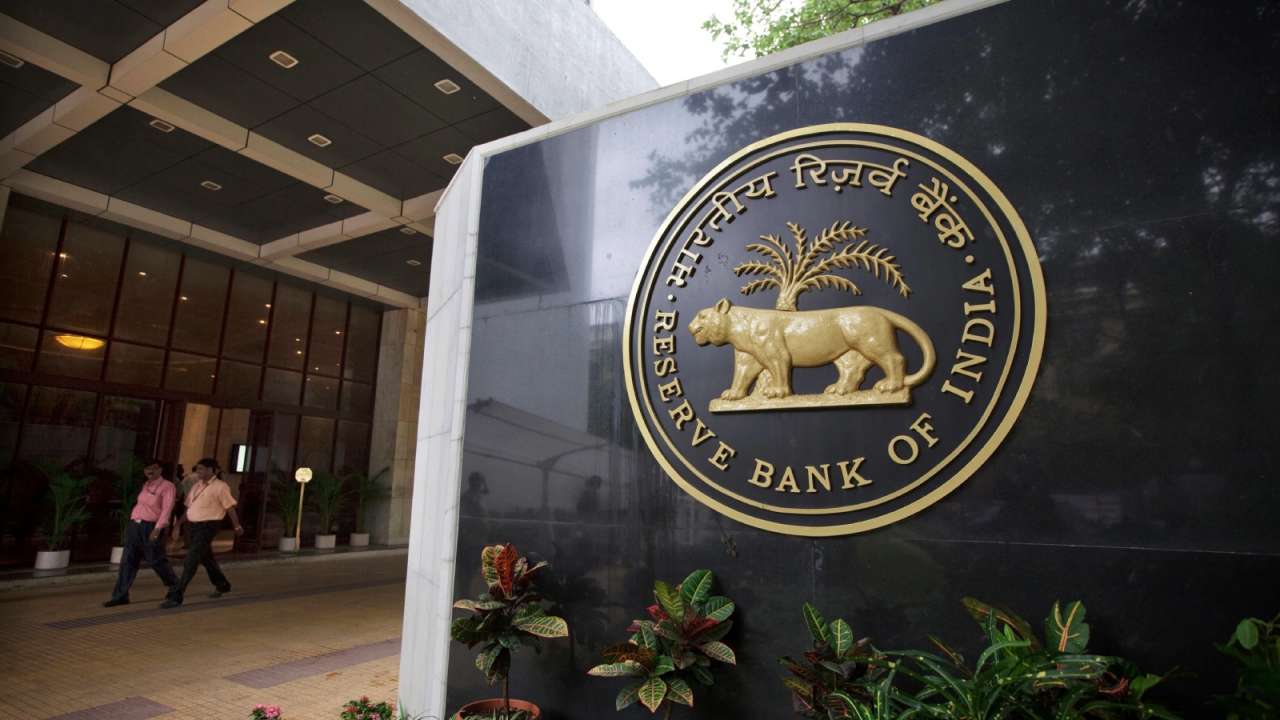 Your loan EMIs are about to rise: RBI hikes interest rates by 0.25%
 GST Council October 8 meeting: No rate changes expected; reforms on refunds, ITC and registration on agenda
 OTT Releases This Week (Sept 28 - Oct 4): Dupahiya 2, Pooja Meri Jaan; new movies and shows to watch this Gandhi Jayanti weekend
 From Neeti Mohan, Heer, Sarthak Kalyani; Ahead of Sa Re Ga Ma Pa, 5 musical geniuses championed by AR Rahman
 72nd National Film Awards 2024: Kartik Aaryan, Yami Gautam, Aditya Dhar, Mammootty, Dhanush, Anant Nag accept honours
 OTT Releases This Week (September 14-20): Lust Stories 3, Irumudi, Thudakkam; Indian movies, series to watch on Netflix, Prime Video, JioHotstar
 Ganesh Utsav 2026: Deva Shree Ganesha, Sindoor Lal Chadayo; 5 iconic Ganpati songs that should be must-haves in your playlistDhruv Rathee joins Bengaluru protest against SIR, CJP plans bigger Delhi agitation on October 10| Video
 IndiGo Patna-Lucknow flight hit by lightning at 17,000 feet, makes emergency landing; nose damaged
 Gyanesh Kumar row: Congress declares October 8 ‘Black Day’ after Rahul, Priyanka detention
 Delhi Building Collapse: Death toll rises to 3, several injured after collapse in New Seemapuri
 CJI Surya Kant to attend NLSIU Bengaluru convocation on Oct 17 after cancellation row
 Third Language Row: SC extends relaxation to Class 6 students, asks CBSE to grant exemption, here's what it means
 NEET PG 2026 Result Out: Check how to download scorecard from natboard.edu.in; Know category-wise cut-off and more
 Five-year BTech programmes? Ex-IIT director makes proposals amid IIT suicide controversy
 CBSE Date Sheet 2027: When will Class 10, 12 timetable be released? Check details here
 From Rs 150 in 1947 to powerful student body: The story of DUSU’s rise | Explained
 After Hyundai, Maruti Suzuki makes cars costlier ahead of festive season: Check new prices after hike
 Hyundai cars to get costlier from September: Check new prices and reason behind hike
 Why can't consumers choose pure petrol or E10? Centre explains why E20 is now the standard fuel
 Centre claims E20 fuel does not damage engines, cites data from Maruti Suzuki and Hero MotoCorp
 Maruti WagonR Flex Fuel: What’s price of India’s first ethanol car? Specs, mileage, and top features explained
WORLD
The virus can range anywhere from being mild infectious to a potential epidemic. Here's everything you must immediately know

Updated : Jan 25, 2020, 12:09 AM IST | Edited by : Joydeep Bose




A new strain of virus has managed to take the world by storm - the Novel Coronavirus (n-CoV). As many as 26 cases of death have been reported in China, from where the virus is believed to have spread - more specifically, from a seafood market in central Wuhan city. At least 830 other cases of the outbreak have been reported, even as far as the United States.
The concerns are aggravated especially considering the fact that millions of people have travelled to China in this time of the year for the Lunar New Year celebrations, exacerbating the risk to several degrees as the virus can now potentially travel to anywhere in the world, being transmitted by people from all walks of life across various regions.
Amid these concerns, the medical community of the entire world remains on high alert, monitoring subjects and consulting their medicinal know-how to come up with a cure as soon as possible.
Here is everything you need to know about this virus.
According to the World Health Organisation (WHO), coronaviruses are a family of viruses that affect mammals and birds, causing a variety of diseases that range from diarrhea in cows and pigs, upper respiratory diseases in chickens, to a host of respiratory infections in humans.
These infections, in turn, can range from mild - such as the common cold - to more severe and potentially lethal, such as those caused earlier by the Severe Acute Respiratory Syndrome coronavirus (SARS-CoV) and the Middle East Respiratory Syndrome coronavirus (MERS-CoV). What this Novel Coronavirus (n-CoV) will cause remains to be seen, but the symptoms are listed later in the article.
The name "coronavirus" is derived from the Latin corona and the Greek κορώνη (korṓnē, "garland, wreath"), meaning crown or halo. This is because, under an electron microscope, the virus appears as if a royal crown or a solar corona.
To answer this would prove tricky. Some experts have said that the Novel Coronavirus (n-CoV) might not prove as deadly as some previous manifestations of the coronavirus, such as the SARS-CoV or the MERS-CoV, but there is nothing definitive to come to a conclusion as such.
For context, the SARS coronavirus (SARS-CoV) had killed nearly 800 people worldwide during a 2002-03 outbreak, also originating from China. The MERS coronavirus (MERS-CoV) did not spread as much (keeping itself largely limited to the Middle-East) but proved far more deadly, killing one-third of those infected.
Now, the Novel Coronavirus can range anywhere between mild infectious to as deadly as its predecessors or even a potential epidemic. Only time can tell.
Yes, the coronavirus can be transmitted. Human-to-human transmission of the n-CoV has been confirmed in China. Besides, its two earlier manifestations - the SARS and the MERS - were believed to have been transmitted by animals. SARS, for instance, was believed to have been transmitted from civet cats to humans while MERS travelled to humans from a type of camel.
People with the Novel Coronavirus infection have reportedly had mild to severe respiratory illness with symptoms of -- fever, cough, shortness of breath.
In more severe cases, it can lead to pneumonia, severe acute respiratory syndrome, kidney failure, and even death.
According to the Center for Disease Control and Prevention (CDC), the symptoms may appear in as few as two days or even as long as 14 days after exposure.
As of January 24, Chinese officials have confirmed that the Novel Coronavirus has caused as many as 26 deaths in the Hubei Province, of which Wuhan is the capital. It is being said that the virus first spread from a seafood market in this city. Most of the other 830 reported cases of the n-CoV outbreak in China are in this city, too.
Apart from China, four cases have also been reported in Thailand. Three cases have been reported in Singapore, two in Japan, and one each in South Korea and in Taiwan. What is most concerning, however, is that one case has been reported as far as the United States, indicating that the n-CoV has already somehow travelled across the seas.
All the cases involve people who had either come from Wuhan or been there recently.

Very little is known about the n-CoV as of now, but here is a general guideline that you can follow to keep yourself safe:
* Wash your hands often with soap and water for at least 20 seconds
* Avoid touching your eyes, nose, or mouth with unwashed hands
* Avoid close contact with people who are sick
Though there are no specific treatments for illnesses caused by the coronavirus, most people will recover on their own. However, those infected can take certain steps to relieve your symptoms --take pain and fever medications, use a room humidifier or take a hot shower to help ease a sore throat and cough, drink plenty of liquids, stay home and rest.