Reported By: | Edited By: |Source: DNA |Updated: Nov 21, 2013, 01:44 PM IST

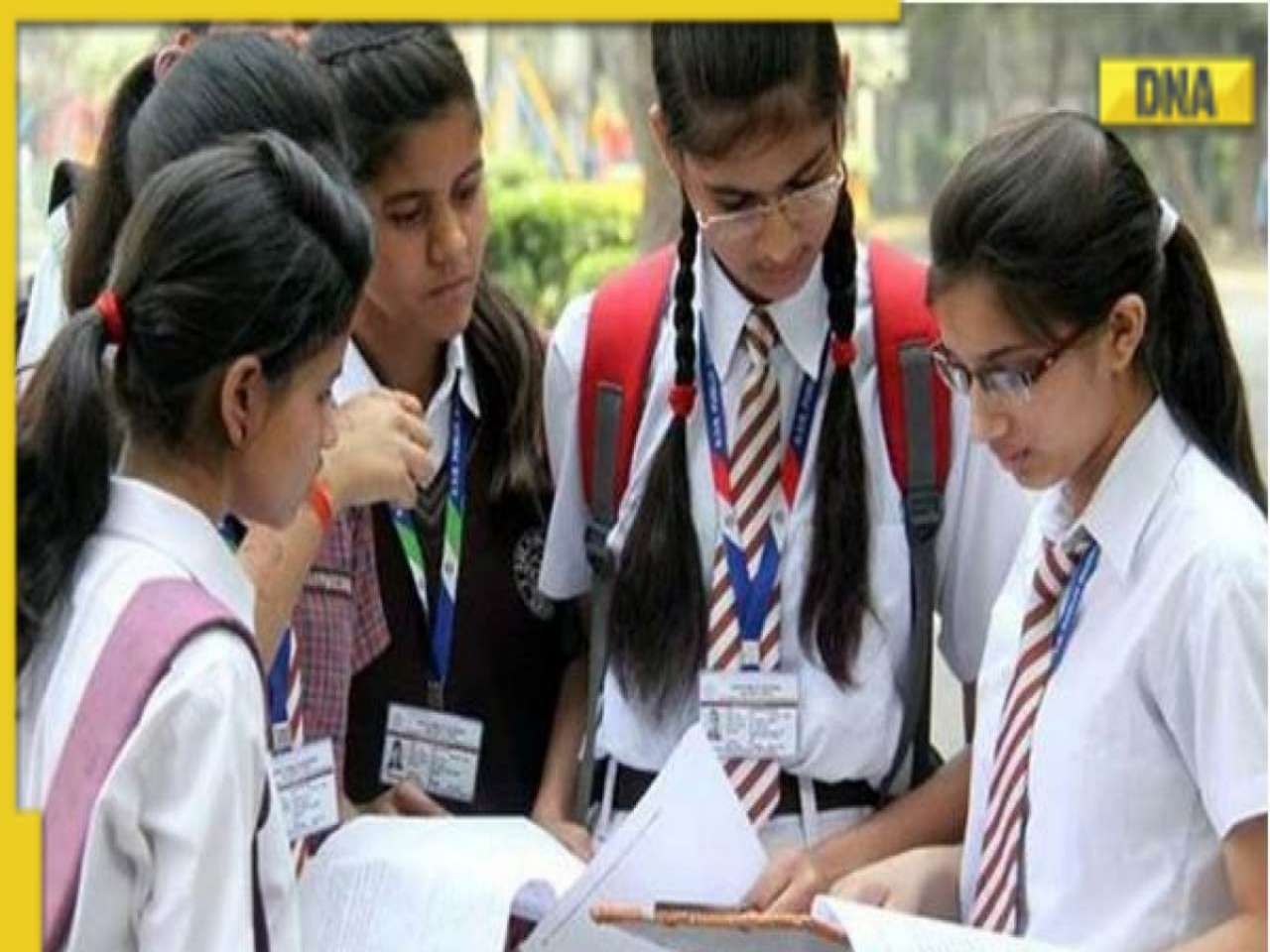
Principals from prominent city schools discuss the Union HRD minister's proposals to improve school education, particularly his plan to do away with the std X board exams.
Ranjona Banerji: Hi and welcome to DNA YA! Conversations. Education minister Kapil Sibal has come up with some interesting proposals for schools to think about. The CBSE has already done away with the board exams. Would other boards like to follow suit? What about a national curriculum, if not one board?
Aditi Banerji, vice-principal, St Gregorios High School: One board, one curriculum, definitely. But if we are thinking of scrapping exams at the Std X level then it cannot be limited to one board. The intent is to bring down stress levels, allow children to go into Std XI with a happy outlook. But you just cannot have it with one board; that leaves the others nowhere. Also, the children in schools which do not go up to Std XII will have to be accommodated.
T Kalathinathan, principal, Atomic Energy Central School 2: I have to agree. We should go for one board, one curriculum. Differences are bound to happen if we operate too many boards at the same time and the CBSE introduces something new. Certainly there are some drawbacks. But if it is introduced universally in all sections of the country, it will work well. We can get the whole nation, Kashmir to Kanyakumari, together using this system.
Hemali Gada, principal, Hemali's Edupark, Malad: The stress levels that parents have when their children are really small, about whether to put them in SSC or ICSE or IGCSE or any other board, are really high. Young parents are very confused. So having a universal board will be good.
Neha Chheda, head of department, Shishuvan: Yeah, definitely, I think one board seems an ideal situation. I think politics and education are really mixed up.If you look at it, nothing really functions from the Centre directly -- it is all state-driven in our country. There is more than meets the eye when it comes to a single board. Of course, the benefits, whatever we have spoken of, are there with one board, but there is still a lot of debate left.
Madan Rao, principal, Atomic Energy Central School 1: Logically, it has to be one board. Right now, topics are completely different across boards, across states. But before implementing anything there should be awareness and opinion. Education being a state subject, we cannot ignore the states. Naturally, the politicians will have a stake, unfortunately, ignoring the children, parents, administrators, and educationists. But one board is definitely a way towards progress. But for that, a lot of debate has to take place and documents have to be prepared with consent from all the stakeholders involved.
AK Hazra, principal, Atomic Energy Central School 5: Recently, I was in England to see what type of schools and education system they have. It was a great surprise to me that the last Class X exam they conducted was in 1964. I strongly believe that the Class X exam is not for children. It is for parents. The kind of pressure they create in a child's mind, creativity and imagination are lost. At the school level generally, we deal with the concepts. And the concepts cannot vary from region to region. Addition taught in Kanyakumari is the same as addition taught in Kashmir. So I fully endorse the policy of one board and one curriculum.
Rekha Singh, principal, Presidency School: Doing away with the Std X exams seems like the answer to all of us. But every school has its own idea of judging or assessing a child. So when you say you are going to do away with the Std X board examination, how will the child be assessed? By his own school's results? How could you actually assess the results of a school? The CBSE has the idea of continuous assessment throughout the year and then they are going to go to grade 11 and grade 12. So who is going to judge that? What is going to be the scale? A lot of homework is required.
Kishore Pillai, principal, RIMS International School & Junior College: I do not stand for a single board system because it is going to be very difficult. Education is a state subject. So there are going to be a lot of issues before we reach a conclusion. But we need some basic policies in place which define education, which we don't have at the moment. There is a quality in the curriculum framework, but not all boards that come into India follow that framework. So I think if the government focuses more on the framework of education and all the boards follow the course curriculum in the manner that they are asked to, it will make a lot of difference. It is not the boards that are a hindrance to a child's education system; it is the manner in which a board performs or manages itself that is the problem.
Moreover, who monitors the quality of education? A big question. We have inspectors who take charge of state schools who themselves have never been teachers. In the UK, there is a very clear framework of education and you develop yourselves within that. You come up with a lot of innovations and that keeps your board alive and competitive. I feel that's how it should be.
Zeenat Bhojabhoy, vice-principal, Jamnabai Narsee School: I have put down some questions. One board, one curriculum, yes, but how? Who are the policy-makers? Are they classroom teachers? No, not at all. Are we looking at both, the urban and the rural setup? There is no one here from the rural setup. They are in a miserable condition, right from the understaffed scenario to the mid-day meals to no textbooks, no school, and no teachers. If we are looking at the future prospects of young adults of the entire country, then best practices of all curricula should be adopted and a curriculum should be designed accordingly.
One board, yes, because the content matter is the same whether you are teaching the ICSE curriculum or the SSC curriculum or the international curriculum. The only differences are in the teaching and assessment strategies. A standardised, diagnostic entrance test at the end of Std X would be appropriate. Parameters can be set. What a 15-year-old ought to know in terms of understanding an application is more than enough. But teachers need to be involved, you cannot have anything with a political colour, you cannot have dictates being given from air-conditioned offices. Go to the villages, go to the municipal schools. We are all from elite schools, upper-middle-class schools, middle-class schools. We have facilities they don't.
Manju Borkar, principal, Billabong High International School: There are advantages as well as disadvantages. But I think, as an educator, we all have to encourage children to face the turbulent world of the future. We all passed out from state boards, at least I have, and today if I can stand here as a principal, I think the education is more or less the same, whichever board you follow.
Are we catering to the needs of the child? There are so many unrealistic expectations from parents. They always feel that others get things more easily. I think the board doesn't make a difference. It is how the teacher looks at it, what is the student-teacher ratio (we have a ratio of 24:2), how the teacher handles the child, whether she satisfies the needs of every child. I think the board really doesn't make a difference.
Aparajita Rana, principal, Greenlawns, Worli: I think having a number of boards brings in diversity. We are a multilingual, multicultural nation and taking in the aspects of rural, urban, semi-urban, semi-rural… so when you are setting up a school, you are looking at your stakeholders. Who are your stakeholders? The parents, the children and the backgrounds they come from. So I have the choice to pick a curriculum that suits my socio-economic scenario. When you talk about one board, are we bringing down the students from urban schools to the rural level or are we trying to put pressure of a certain curriculum on a rural child? Having a number of boards is a very healthy scenario for a country like India. Secondly, it keeps all educationists on their toes. We share ideas, we share the pedagogy that is taking place in various other boards that have come in recently. It is healthy competition.
Revathi Srinivasan, principal, Smt Sulochanadevi Singhania High School: I feel education is of the mind, body, and soul. Somewhere along the way where we are studying education, we are taking it the way history has taken education. Today schools exist because that's what history provided us. If we go back to the pre-British days and British days, that's where education came in. Globalisation brought in other streams. So I think having one board is not realistic.
I think what we need is variety. We need to learn from one another. We need to keep our minds open. But what we have are interfering politicians and the mess they have created. We haven't taken into account rural India or even suburbs of many metros. Also, teaching for the present generation is becoming a profession of last resort.
Effectively I would say that minimum learning competencies have to be attained at every age level. Between 3½ and 4½ what is it that needs to be taught irrespective of which board we belong to? Is our education about qualification? No. We have to prepare our children for life. We have to teach them life skills. We have to make them thinkers, inventors. Are we doing that? We haven't created another Rabindranath Tagore. Why? I'm very happy that present-day schools are evolving, they are trying to adapt, trying to do so many things… but for that, we need the support of a government that doesn't put up obstacles in our path.
Arundhati G Hoskeri, Billabong High, Mahim: One board, according to me, in the Indian context, isn't going to work. If it works, fine, then I'll be the happiest person. But in reality it isn't possible, for the simple reason that we speak so many different languages. All of us are forgetting that we aren't just talking about the minimum population of the urban lot; 70% of India is rural where, as it has been rightly pointed out, there are no facilities for education. So it means we are going to completely mess up the system if we try to have one board.
Secondly, if you try to make one board, you cannot lower the standards of the urban lot and you cannot raise the standards of the rural lot. At the same time, finding teachers in urban areas is so difficult, let alone the rural areas! The call centre system has messed things up to such an extent that it is very difficult to find teachers. They come, improve their skills, and go, because they get Rs25,000 with free food and drinks, pickup, drop, and all that.
As for doing away with the SSC exam, I'm totally against it. For us, we understand, we are imparting knowledge and the clients we cater to, they are all educated. We can persuade them. But for people from rural areas, giving an SSC exam is like getting an IAS degree. Even if they get 40%, it is a huge achievement. Why would you want to take away an achievement from somebody like that?
Mallika Subramanium, principal, Navy Children School: I think we should go for one board, one curriculum because it gives scope for the majority of the population. This is the only place you see state boards, global boards, central boards, etc. We need a common board till Std X at least.
I'm not in favour of scrapping the board exams because we see so many changes coming up. Students are getting smarter, what with all the technology coming in. I think they should face competition, they should be prepared to give exams. In fact, they should be prepared from grade 8. We cannot stress out children, so we need to change and redesign the curricula. Make the curricula simpler and let them appear for the Std X exam.
Avnita Bir, principal, RN Podar School: We are living in a globalised world and boundaries are disappearing. So why is it that we move from one state to another and the child has to cope with the jump from one board to another? We are not making the mobility of parents and children easy. We like to think of our school as a melting pot for children from different parts of the country and, maybe, the world. And when they come in, it becomes so difficult. They have to adapt to a new board, a new language. So when we are talking about boundaries disappearing and the world becoming smaller, then why should education be isolated?
Mallika Subramanium: Why should education be a state subject? It should be the responsibility of the Centre.
Sunita George, vice-principal, RN Podar School: One board is a great idea because if you look at it, every board deals with the same topics and concepts, only the approaches are different. Why waste so much time? Today, if they want to join a certain course, they have to go through a competitive exam because they all come from different boards. Once we have one board, a lot of issues such as college admissions will be solved and everybody will be on one level. As it is, the curriculum is more or less the same.
Avnita Bir: Parents are confused about the differences between one board and another. They come and ask me, how does CBSE differ from ICSE. Now there is one more board, international. So I think too many options create a lot of confusion among parents.
Suresh Pawar, Bhausaheb Hiray Vidyalaya: Ek hi board hona chahiye. Board ek hone se admission ka bhi problem barabar hota hai. Evaluation ka problem bhi sahi hota hai. Lekin, board exams cancel nahin karna chahiye.
MS Sheela, principal, Ryan International School, Goregaon: We are a diverse country; we have so many states and regional languages. If you look at the boards also, state boards, ICSE, CBSE, second and third languages are a problem for parents when we have parents coming from other states. That is a major disadvantage. So, definitely, one board is the option for our country. The board schools work under the respective state governments. And the state government brings in its directive that students should learn a regional language. If the boards are uniform, then the admission problem will go away.
Archana Singh, Ryan Gobal School: When the curriculum is more or less the same, why are we wasting so many resources on different boards, different textbooks, different patterns of examination, and different grades of the evaluation system.
Ranjona Banerji: Most of the objections for one board are the logistical and practical problems in implementation. But we are first talking at the conceptual level. I'm afraid I'm not an educationist, so I'm unable to understand the diversity theory. As far as I can see, you have one country, with one people. If the question is of language, that adjustment can be made. Now if you have to make it rural-urban, that's not being addressed right now anyway, because each state has one board which is across the entire state. So having various boards is not helping rural children any more than it is helping urban children. Yes, we have had this whole influx of foreign boards, but they are a symptom of the dissatisfaction with the quality of education. If we had felt that our education at whatever board was of a high enough standard, would they have found an entrance? I mean, we are not exporting ICSE to England, or SSC, or any of our boards.
T Kalathinathan: I think we are being (unnecessarily) critical. Basically, we are trying to discuss whether one board is required. Logistics will come later. But we are trying to discriminate by bringing into the picture the rural-urban divide. Every state has cities and rural areas under the same board. So I don't know why people are discussing whether we should bring the level of urban people down.
God willing, a common evaluation methodology will be formulated and everyone will have to comply. You cannot have your own independent judgement up to the 10th level. At this stage, why criticise the strategy? If it is not implemented properly, fine, everyone will jump on that. But to start with, why go negative? Competition is there in one board too. Who says there won't be competition?
AK Hazra: We are forgetting the basic purpose of education: to discover a child. Why does the question of competition come here? The very concept of competition between this board and that is killing the creative instincts of a child.
Revathi Srinivasan: Personally, I feel there is nothing wrong in having three or four boards. It's a large country.
Ranjona Banerji: We do not have three or four boards; we have 26+ boards.
Kishore Pillai: No, the issue is, whenever there is a proposal, is it documented in a way that tells everything about it? The proposal should have all those things in place. Then probably we won't even have the argument of rural-urban or anything.
Avnita Bir: I think the CBSE has 10, 000 schools affiliated to it and it offers its curriculum into the remote rural areas and it is catering to the diversity. It has schools --- elite schools, private schools, govt schools --- so it is catering to a diverse population.
Sunita George: In Mumbai, if you look at a CBSE or ICSE school, every school is doing so much add-on, but the board is the same. So nowhere is it given that a board binds you. It just gives you a physical framework.
Archana Singh: If you look at the time tables of two different schools following the same board, they are different. This goes for their question paper patterns and textbooks.
Zeenat Bhojabhoy: If you compare environmental education in Std X in the ICSE and I'm teaching environmental management in Std X IGCSE, what stops me from adopting the teaching strategy across both?
Avnita Bir: I think educationists should sit together not even as a board. For example, CBSE was primarily an examination body. It was an administrative body rather than an academic body. Their academic inputs come from the NCERT. The NCERT has done the NCF and everything is based around the NCF, the ICSE, CBSE, and even state board textbooks. CBSE, ICSE, or IB, none of these boards has prescribed textbooks. They just say, these are the areas we want to cover in grade I, this is what we want to cover in grade II, that's all. After that, it is the school that is going to decide how to teach that topic.
Aditi Banerji: From the questions we are raising here, many have been answered by Kapil Sibal, like evaluation and not having an exam before Std XI, whatever board we follow. Now why are we so much in favour of it? Because the offshoot is extreme competitiveness and innumerable coaching classes, which are killing our children. So the biggest positive aspect is that if there is no Std X exam, students are absorbed within the same school. For those who are leaving, according to Sibal, there is going to be an extremely extensive question bank on which the children keep training. So, no matter where they go, they are trained accordingly. So if that is the criterion, then I think we need to accept it. Of course we're justified in thinking differently, but with an open mind...
As for the question of policy-makers, he has also very categorically stated that this is not something the politicians have come up with, out of their hat. He has had a committee on which he has teachers from every level --- from the pre-primary, primary, secondary, middle-school, and college level, and professors, retired as well as working. He had an entire team in place.
Ranjona Banerji: Well, it seems from outside that at least Mr Sibal has some interesting ideas.