 Dr Hassan OTT release date: Nawazuddin Siddiqui, Dia Mirza-starrer Indian House adaptation to premiere in December
 Patek Philippe watch worth Rs 94 lakh seized at Delhi Airport, passenger arrested
 VB-G RAM G Act: How will district-level ombudspersons handle rural workers' complaints? Explained
 Dhurandhar 2 receives zero nominations at 2027 Grammys despite nine entries, Tamil song Varuvaaiy creates history
 Trump-Xi-Putin Meet: Seven reasons India could pay price for a new global power dealPatek Philippe watch worth Rs 94 lakh seized at Delhi Airport, passenger arrestedVB-G RAM G Act: How will district-level ombudspersons handle rural workers' complaints? Explained
 SC issues contempt notice to lawyer Pravin Singhal over alleged objectionable remarks against CJI Surya Kant
 Rahul Gandhi slams India’s economy during US visit, BJP hits back with ‘anti-India’ jibe
 Milk becomes a luxury? Inflation pushes Indian families to cut back on dairy and essentials
 India-Bangladesh Border Tension Escalates: BSF jawan captured, detained by BGB
 US launches strike on Iran’s Qeshm Island after Bahrain base comes under attack
 Who is Asif Merchant? Pakistani national jailed for 27 years over Trump assassination plot
 1 Indian missing, 2 hurt in attack on LPG tanker in Strait of Hormuz; MEA raises concern
 PM Modi announces free e-visas for ASEAN tourists, boosts India’s Act East PolicyTrump-Xi-Putin Meet: Seven reasons India could pay price for a new global power deal
 India Eyes $1 Trillion Exports As 7-Month Exports Hit $570 Billion
 PM Modi Attends Quad Summit: How can India corner China in Indian Ocean without firing a shot: 5 strategic moves
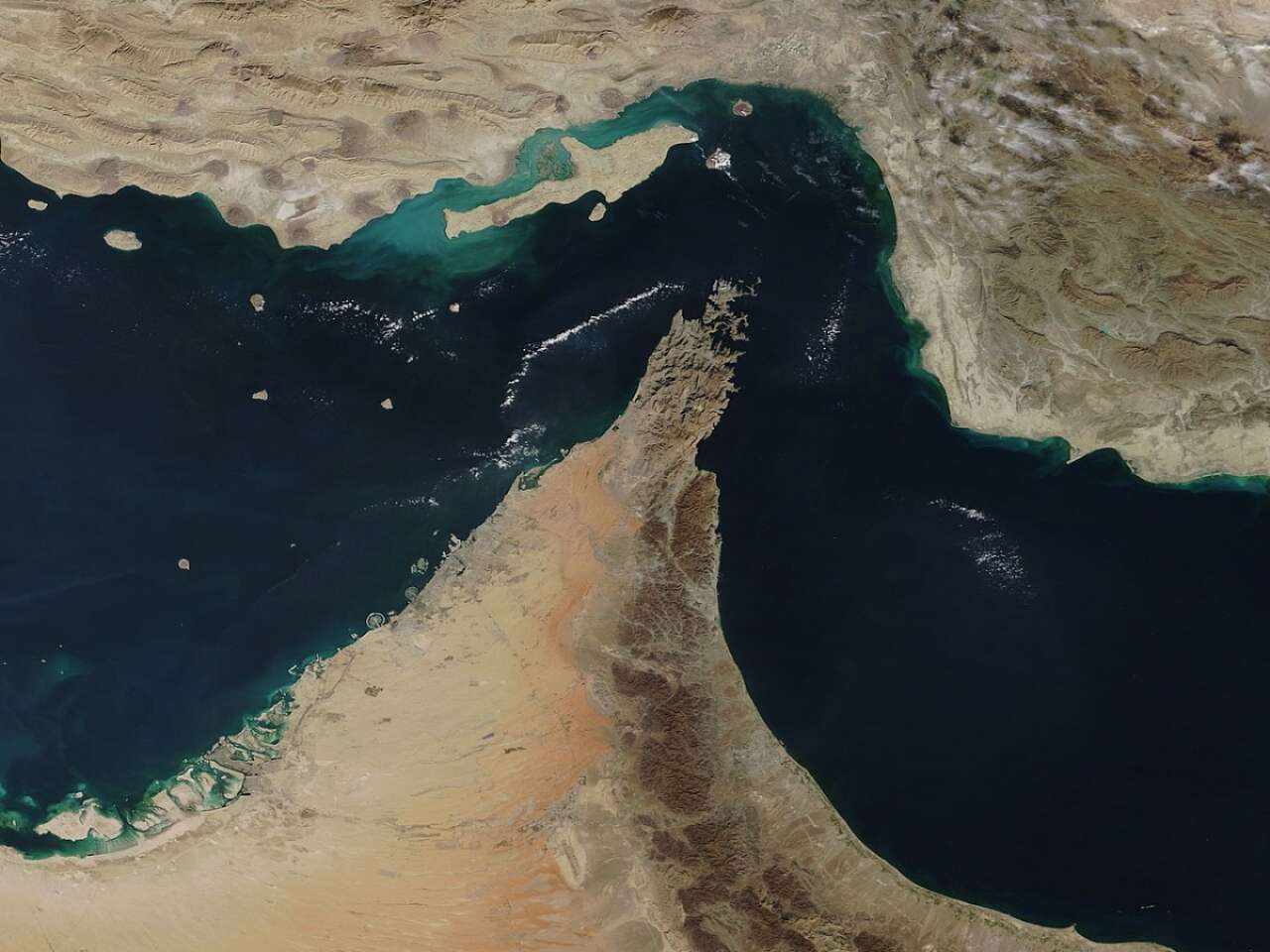 Oil Tankers Catch Fire In Strait Of Hormuz: Will petrol and diesel prices rise in India?
 Modi-Trump Meeting In Manila: 5 Big issues India-US may discuss, from China to trade dealDr Hassan OTT release date: Nawazuddin Siddiqui, Dia Mirza-starrer Indian House adaptation to premiere in DecemberDhurandhar 2 receives zero nominations at 2027 Grammys despite nine entries, Tamil song Varuvaaiy creates history
 Anne Hathaway welcomes third child with husband Adam Shulman
 Prince William meets Karan Johar, Saif Ali Khan, Kareena Kapoor Khan at Dharma Productions office, see viral photo
 Panchayat Season 5 OTT release date: When and where to watch Jitendra Kumar, Neena Gupta-starrer series
 India's Astrology Boom: Faith, big business or emotional dependence? Who is watching the industry?
 Did NBCC commit contempt of court? Firm resumes auction of flats despite matter being sub judice
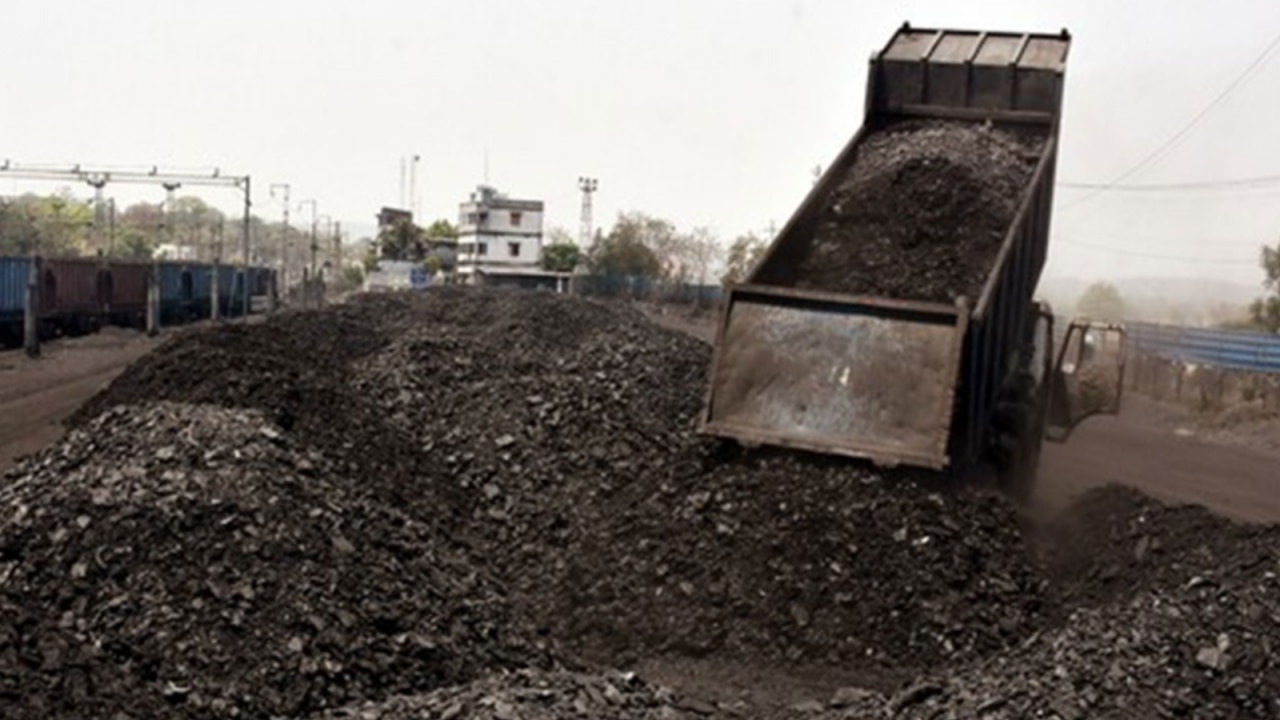 Mahanadi Coalfields IPO: 10 Things to know about issue date, GMP, price band, size and listing
 Tata Sons Listing Row: Why Noel Tata fears it could change Tata Group
 Who will replace Jensen Huang at Nvidia? 3 Indian-origin executives in the race
 Shah Rukh Khan's KKR valued at Rs 16,634 crore: Who is buying Jay Mehta's stake?
 LSG head into IPL 2027 mini-auction as richest team with Rs 47.45 crore: Check purse of all 10 teams
 Who knew what in Australia's Sandpapergate scandal? CA gives players another chance to speak
 Tom Latham drops a big hint on New Zealand's biggest weapon against India
 MS Dhoni among IPL's oldest players: Who tops list, where does CSK legend rank?
 Cyclone Akvan: 7 Andhra Pradesh's Districts On Red Alert Ahead Of November 20 Landfall | Odisha
 CJP News: 'Condition In Delhi Police Won't Leak It...' Saurav Das Submits Address Proof To Court
 Punjab News: Head Constable Shot Dead In Punjab, Sixth Cop Killed This Year | Bhagwant Mann
 Cyclone Akvan: Odisha Deploys 74 Rescue Teams, Begins Evacuation Ahead Of 'Severe Storm' | Andhra
 Uttarakhand Bus Accident: 6 Killed After Bus Falls Off Bridge On Rishikesh-Badrinath Highway
PERSONAL FINANCE
Investing in EPFO is a good option and can give an 8.64% returns in and comes with significant tax benefits

Updated : Jan 03, 2018, 05:25 AM IST

















Bank deposits constitute a dominant share of financial savings. However, with fears that fixed deposits (FDs) would not be secure after the passage of the Financial Resolution and Deposit Insurance (FRDI) Bill, many investors are searching for alternative investment avenues to bank Fds.
“A safe choice would be Post Office fixed deposits (FDs), National Savings Certificates (NSCs), Public Provident Funds (PPFs), etc,’’ says PV Subramanyam, chartered accountant and financial trainer.
However, the downside is that it would entail dealing with the post office, which may be a difficult experience for those accustomed to the conveniences of banks, especially private banks.
“Those above 60 years can also invest in LIC’s annuity schemes,’’ adds Subramanyam.
Adhil Shetty, CEO and co-founder, BankBazaar.com says, “As far as traditional investments go, if you are looking at long-term investments, investing in EPFO is a good option. It gives you an 8.64% returns and comes with significant tax benefits. If you are looking at a smaller window, there are schemes such as the five-year National Savings Certificate (NSC) that provide 7.6% returns along with tax benefits. However, the liquidity in these investments is very limited.’’
Those who are not too risk-averse can opt for mutual funds.
“Debt funds give superior returns compared to bank deposits, especially if one stays invested for more than three years, due to the long term capital gains tax benefits,’’ says R Sivakumar, head, fixed income, Axis MF.
Most risk-averse investors prefer a traditional mode of investments like bank FDs as they guarantee interest, but are not aware that fixed income mutual funds too offer investing options for the risk-averse investors.
“While MFs do not guarantee returns, they do offer options which help mitigate interest rate risk. For instance, Fixed Maturity Plans (FMPs) lock in assets in line with maturity date of the scheme, thereby reducing interest rate risk to a large extent. Liquid and ultra short-term funds too can be considered for conservative investors as these funds typically invest in short dated instruments. However, the credit risk still remains a potent risk, which can be reduced by investing in high grade credit schemes,’’ says Lakshmi Iyer, CIO- debt and head of products, Kotak Mutual Fund.
For those who are open to some risk can invest in equity as it allows investors to beat inflation in the long term. “Mutual funds are the safest and best way to invest in the market. Equity funds in India have generated close 15-17% CAGR over the past 10 years. That’s about 8-9% above inflation. When you compound this annually, this gives you a significant amount of wealth over an extended period of time,’’ says Shetty.
Interestingly, most investors swear by fixed deposits due to the safety factor. But when they choose mutual funds, they prefer to invest in equity mutual funds rather than debt funds. “Retail investments in industry are highly skewed towards equity,’’ says Sivakumar. Debt funds are dominated by corporate and high networth investors. “Why not have debt funds as core investments for retail investors?’’ asks Sivakumar.
While deciding which fund to invest in make sure to match the level of risk with the type of funds. “Choose the fund based on your holding horizon,’’ says Sivakumar. Depending on one’s risk profile, one can choose from debt, balanced or equity funds.
Incidentally, debt funds too could give negative returns, especially at times of a global crisis. In order to mitigate such risks, investors should stay invested for long. “If one holds for long, even a minimum of three years, usually the returns are normalised as the volatility settles down in that period,’’ says Sivakumar. After all, the debt market is less volatile than the equity markets.
For those who prefer to continue with FDs, Subramanyam advises that they ensure they open fixed deposits only in good strong banks rather than opting for the bank that is closer to home. “If you have a deposit with one of the good banks, then you do not need to move your deposits,’’ says Subramanyam.
"Given falling FD rates, maybe there could be a case to diversify into such MF schemes and not really due to the FRDI bill," adds Iyer.
Fixed deposits are a secure way of saving. "However, they are not tax efficient. If you belong to the 30% tax bracket, for instance, your returns after tax on a 7% FD would be in the range of 4.9%. This is not sufficient to build a corpus; neither does it protect you from inflation," says Shetty.
Subramanyam feels that the FRDI bill would actually help to increase the limits of money guaranteed by the banks. "The amount guaranteed may go up to Rs 10 lakh or even more. This covers 80-90% of fixed deposits," says Subramanyam.
If the limits are increased, then most investors need not liquidate their FDs and could continue with their deposits. "The deposits would probably be safer than they are at present," says Subramanyam.