 Atlee shares emotional note for wife Priya on their 12th wedding anniversary: 'You turned a boy into a gentleman'
 Ramayana box office collection day 5: Ranbir Kapoor, Yash film smashes century on Monday, mints Rs 650 crore
 Diwali comes to the Presidential Palace in Cyprus for the first time ever as 'Cyprus Glows' celebrates India–Cyprus friendship
 IND vs NZ, 3rd ODI: Predicted Playing XI, pitch report, weather update and all you need to know
 Amitabh Bachchan behind bulletproof glass reflects failure of PM Modi and Amit Shah, says Congress
 'Bursting firecrackers cures diseases', says Kolkata's BJP MLA
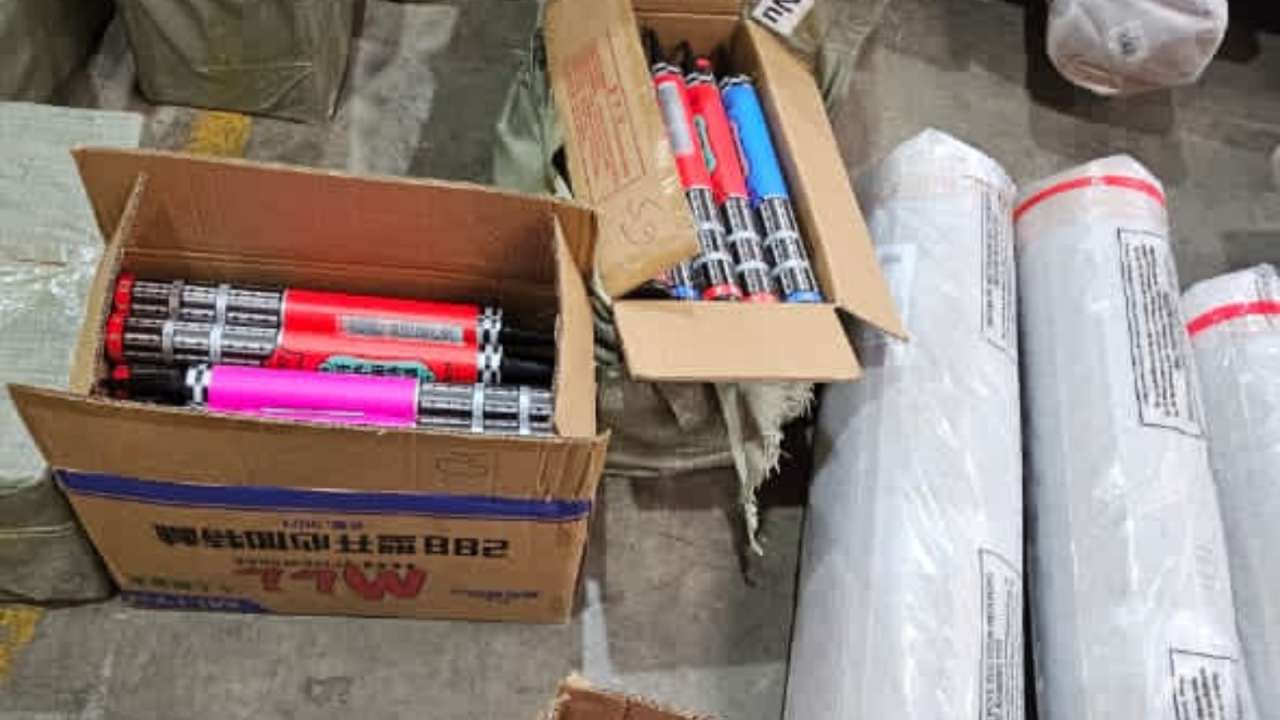 Mumbai bans rockets and aerial firecrackers till November 25 after 137 fire incidents on Diwali
 Who is Paresh Ram Das? TMC MLA arrested at Kolkata airport in rape case
 1.27 crore Hindu voters missing from UP rolls? Yogi takes fresh swipe at Opposition
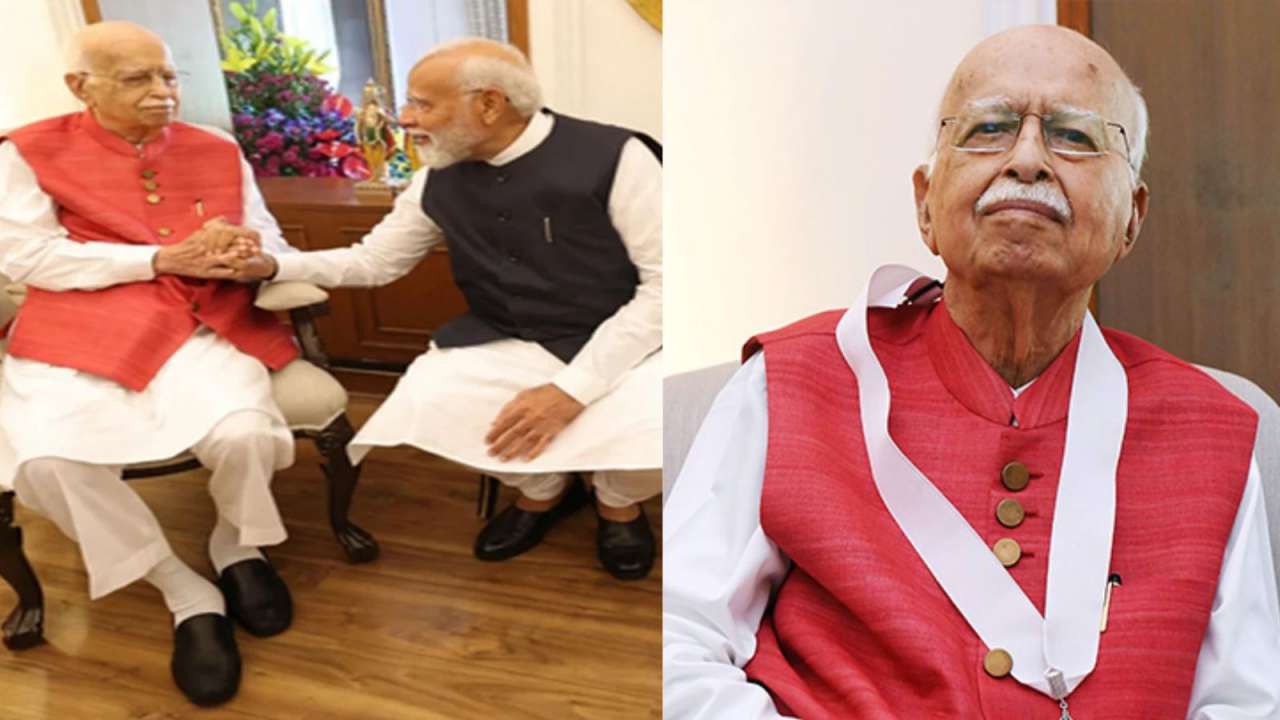 Lal Krishna Advani Turns 100: Know about his net worth and source of incomeDiwali comes to the Presidential Palace in Cyprus for the first time ever as 'Cyprus Glows' celebrates India–Cyprus friendship
 PM Modi talks to Ukrainian President Zelenskyy, discusses how to end war
 China breaks silence on Nvidia CEO Jensen Huang spy allegations: What did Beijing say?
 ‘I hope I go to heaven’: Trump’s remark on hating his enemies in CBS interview draws attention
 Not Delhi: This Indian city is world's most polluted after Diwali with AQI 868; 93 Indian cities in top 100
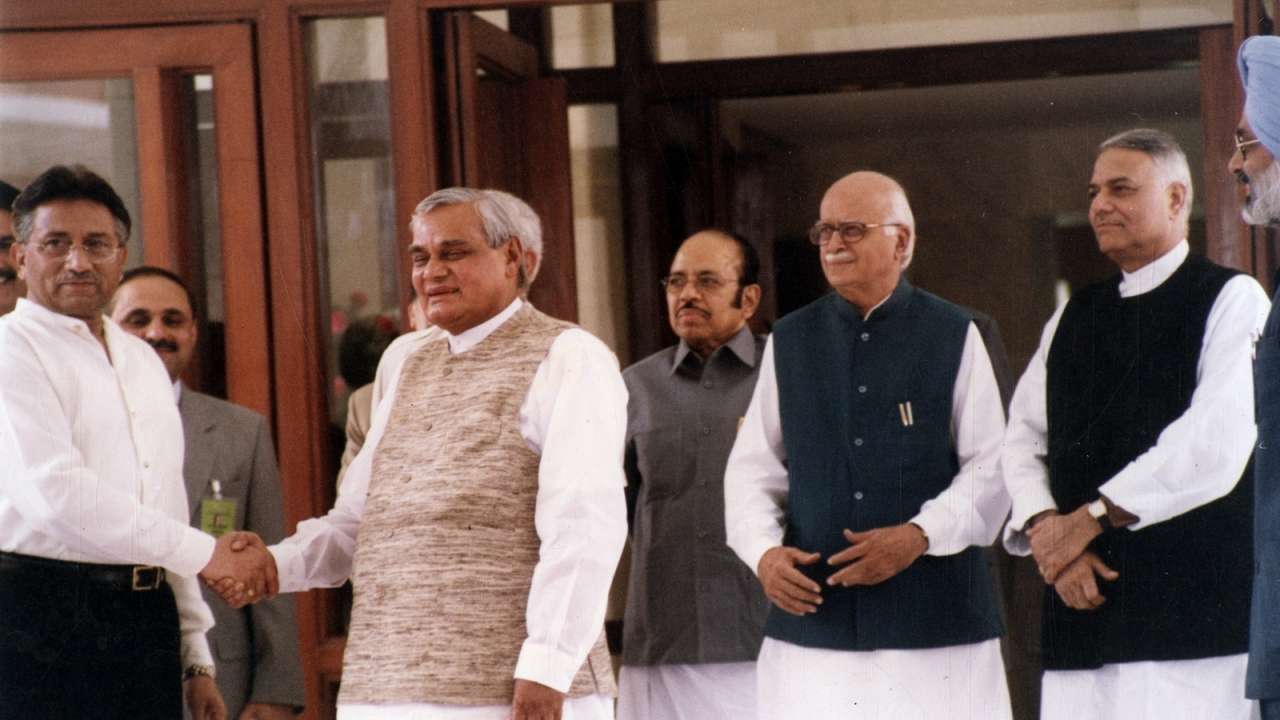 Born in Pakistan, praised Jinnah, abandoned by party: The untold story of LK Advani at 100
 Delhi AQI at 370, 1,000 or even 2,000 after Diwali? Why pollution readings show wildly different numbers
 New Yalta After US Midterm? China plans Trump-Putin talks as Ukraine raises alarm over being left out
 New 26/11 Threat? Is Hafiz Saeed's LeT getting maritime training near Karachi to target India?
 Gold Hits Rs 1.46 Lakh Per 10 Grams On Dhanteras: Check 18K, 22K and 24K gold rates in Delhi, Mumbai, Chennai, Kolkata Atlee shares emotional note for wife Priya on their 12th wedding anniversary: 'You turned a boy into a gentleman'Ramayana box office collection day 5: Ranbir Kapoor, Yash film smashes century on Monday, mints Rs 650 croreAmitabh Bachchan behind bulletproof glass reflects failure of PM Modi and Amit Shah, says Congress
 Why is Mammootty being criticised for meeting BJP leader Gopalakrishnan at his Thrissur home?
 Guru Randhawa takes Punjabi pop to Electric Daisy Carnival as he joins Steve Aoki to unveil Sirra remix
 Rupee climbs to 7-month high, gains 93.70 against US dollar in early trade
 Dhanteras 2026: Are banks open or closed on November 6? Check RBI holiday list
 Why did Sensex surge over 2,000 points, Nifty rally 576 points today?
 Diwali Muhurat Trading 2026: What investors need to know about date, timings and settlement
 Gold, Silver prices today, November 5, 2026: Check city-wise rates in Delhi, Mumbai, Chennai, Kolkata and moreIND vs NZ, 3rd ODI: Predicted Playing XI, pitch report, weather update and all you need to know
 What did Virat Kohli tell Kane Williamson before retirement? Former NZ captain reveals
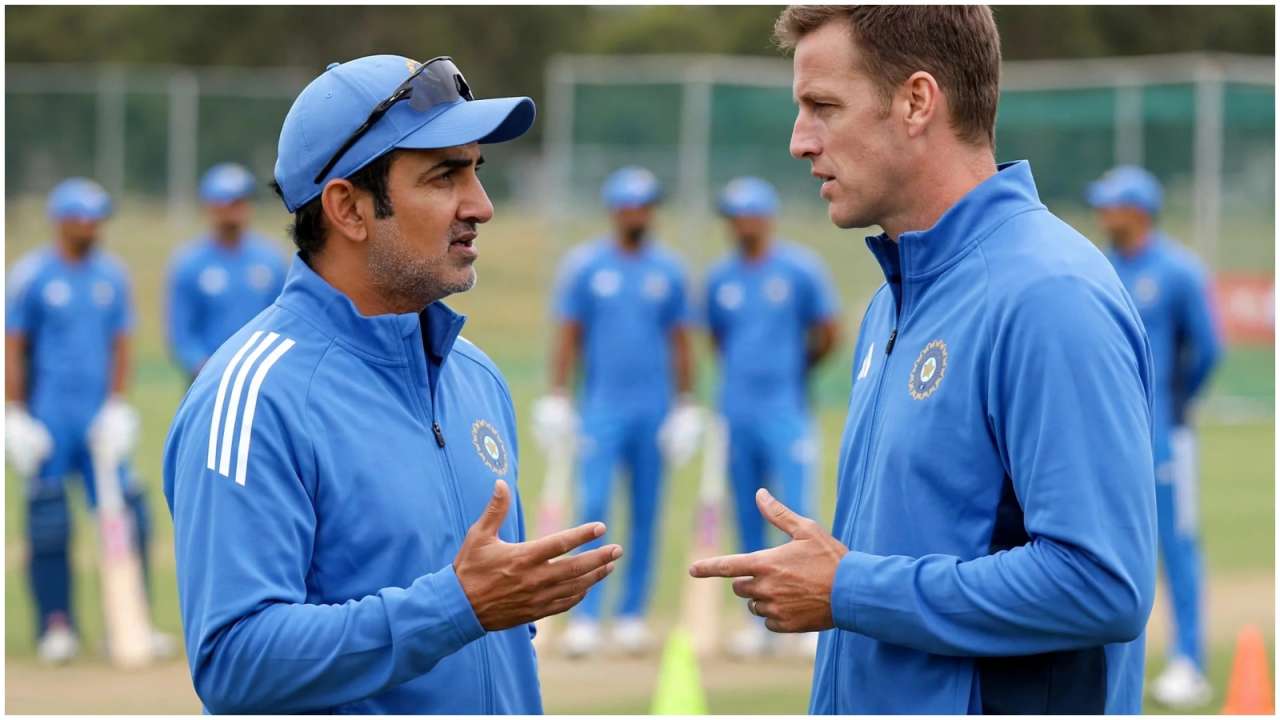 India to split coaching staff after 3rd ODI vs New Zealand: Who is going where?
 Kavya Maran Wedding: Rajinikanth, MK Stalin, Udhayanidhi head to Greece to attend SHR owner, Anirudh's marriage ceremony
 Were coaches afraid of Virat Kohli? Former India coach makes big revelations; details here
 Bangladesh News: 'Fugitive Terr*rist...' Dhaka Slams Hasina's Passport Demand, Calls For Extradition
 Congress vs PM Modi Row: 'Jhola-Picking-Up Time' Remark, Bastar Address & Political Reactions
 Nvidia Scandal: The Megaspeed Connection, Alice Huang Ties & Jensen Huang’s Affair
 US MidTerm Elections: How Trump's Defeat Could Impact Pakistan? | Democrats Vs Republicans | India
 Agniveer News: '2 Year Extension...' Army's Major Relief For Agniveers; CDS Subramani's Full Speech
PEOPLE
Feroskhan Hasenkhan's research leverages his cloud engineering experience to design secure, resilient, and compliant distributed systems.

Updated : Aug 04, 2025, 05:52 PM IST
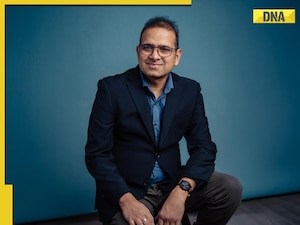
















The technology of the modern enterprise environment involves a delicate balance of skills that are necessary to design secure and responsive cloud infrastructures, and ensure compliance and availability. Feroskhan Hasenkhan has over a decade and a half of experience in the field of cloud security, identity management, distributed telemetry, and automation. His experience is defined by the practical requirements where the regulatory needs, the system availability, and the traceability of operations must all work in harmony.
Feros has used his field experience in his scholarly work, writing technical papers that are as precise and reproducible as the systems that they are produced on. His work focuses on the most critical issues in high-availability infrastructure, secure access management, and orchestration of distributed systems. These articles provide clarity of ideas as well as patterns that engineering teams can adopt, review, and scale. All the contributions report how design choices based on observability, accountability, and compliance can work toward reliable cloud architectures.
Cloud-Native Resilience Architecting in Aerospace Systems
In the article in a peer-reviewed journal titled Cloud-Native Architectures for Aerospace: Enhancing Flight Operations Through Digital Airline Platforms (American Journal of Autonomous Systems and Robotics Engineering, Vol. 1, pp. 200-233, 2021), Feros discussed structural problems of real-time flight systems. The paper has presented an architecture that is to be least fragile in operation of distributed airline systems through containerized workloads, orchestration layers, and policy-driven observability.
Feros also brought to the design his experience with systems that had to be highly resilient and highly performant, and Feros himself contributed design patterns about adaptive region routing and consistent replication of data in dynamic conditions. His knowledge on endpoint telemetry and security policies helped him address the paper on the telemetry and regional data management in real time.
The systems that are cloud-native have to allow orchestration logic that is deterministic in the face of failovers and latency spikes. This perspective influenced his design of balancing workload with the help of observability agents which observe the state transition of the system and help in routing decisions between nodes.
He also helped in some of the sections on configuration drift and deployment alignment. Contributions made by him through his compliance-driven practices aided in ensuring that telemetry and identity enforcement were consistent. The resultant framework offers an effective framework in terms of ensuring availability and compliance of mission-oriented aviation systems.
Making Availability of Buildings in Multi-Cloud Asset Platforms
In the article published in the American Journal of Data Science and Artificial Intelligence Innovations (Vol. 3, pp. 12-51, 2023), the authors discuss the use of multi-cloud systems to improve resiliency and reduce the risk of reliance on a specific vendor. Feros was instrumental in the creation of automation patterns of redundancy, credential synchronization, and policy alignment between environments.
Feros has a history of infrastructure security and identity operations that brought models of telemetry to inform failover behaviour. His experience in the previous work with secure cloud tenants contributed to the design and logic of federated identity in the paper and conditional traffic management. The paper explains the ways in which decoupled systems with no single-cloud dependency can still have a coordinated policy enforcement and telemetry consistency.
Monitoring is not something that can be considered an afterthought High-availability systems need to be policy-aware and failure-intentional monitoring, Feroskhan Hasenkhan states in the paper. This is illustrated in the monitoring architecture presented in the paper in which the alert thresholds are adaptive to the availability and operational context of the services.
Feros also created automation templates of service set up, credential management and identity propagation. His scripting contribution made it possible to have scalable infrastructure provisioning with minimum manual input. These were the practices that showed his continued belief in the controlled environments in which traceability and access controls are essential.
Enterprise security using AI in Identity Governance
The research paper titled The Role of AI in Cloud-Based Identity and Access Management (IAM) in Enterprise Security is published in the Los Angeles Journal of Intelligent Systems and Pattern Recognition (Vol. 2, pp. 3672, 2022), and it focuses on the role of artificial intelligence in enhancing identity systems. Feros has contributed to the research by addressing the issue of maintaining efficiency of AI and accountability and transparency.
He contributed to his operational experience in the deployment of dynamic access controls based on the analysis of behaviour and anomalies. His works have focused on transparent decision-making processes in automated systems, and offered AI as a complementary assessor in IAM processes.
Feroskhan Hasenkhan says in the paper that enterprises have to be sure that the AI-based IAM solutions do not create dark decision-making or unverified access channels. The implementation of this caution is done with the help of a framework that offers context-sensitive access decisions that can be explained and traced.
His ideas on dynamic policy changes according to real-time signals, like posture of devices, location, and access patterns also came in. These thoughts were a result of his efforts in the application of access controls in compliance-driven environments. His emphasis meant that AI-powered IAM processes could be incorporated into the existing governance mechanisms without undermining the control or auditability.
Designing to the Integrity and Operational Truth
In the three studies, Feros has an approach that is practical since it links technical architecture to the implementation. Instead of concentrating on theoretical models, his work is based on execution, traceability and resilience when faced with operational pressure. All the studies are based on real deployments where failure of the control is monitored, studied and dealt with through systematic design.
The approach of Feros starts with the process of defining limitations of the system and then suggesting improvements that will enhance the process of governance without adding complexity to it. His work shows how observability can enhance security, how automation can make people accountable, and how resilience must be made a design consideration.
When it comes to AI-informed IAM practices, cross-cloud orchestration, or telemetry-rich aerospace systems, Feros offers the same approachability and methodology based on compliance, reproducibility, and technical accuracy. His works in research provide practical advice on how to construct systems that work consistently in high-stakes conditions.
About Feroskhan Hasenkhan
Feroskhan Hasenkhan is a cloud architect and security engineer who has more than eighteen years of experience in the field of infrastructure security, identity governance, and automation in distributed systems. He has also helped in the design of secure architecture at the multi-cloud platform and assisted in enterprise compliance under such standards as ISO, SOC, HITRUST and FDA. With experience in PowerShell, C#, and infrastructure-as-code, he focuses on the construction of telemetry-enriched and policy-compliant systems enabling high availability and traceability. His published research work includes cloud resilience, IAM with AI augmentation, and orchestration strategies, all based on the actual field experience and the adherence to replicable system design.