 Supreme Court rejects age-based internet ban for children, says access is fundamental right
 Deva, Tamil's Thenisai Thendral, passes away at 75, scored music for over 400 Indian films, left his fans heartbroken after losing battle to THIS disease
 Thane Shocker: Class 12 students murder schoolmate for gold chain, burn body after taking cues from Drishyam 3
 Mohammed Shami left out of New Zealand tour: Is his international career nearing its end?
 5 family members found dead in Greater Noida; tea and noodles were their last mealMohammed Shami left out of New Zealand tour: Is his international career nearing its end?
 Wasim Jaffer enters race for BCCI chief selector’s role, could challenge Pragyan Ojha for top post
 IND vs WI 5th T20I: Vaibhav Sooryavanshi posts cryptic message after sitting out 4 matches says, 'Still Believing'
 BCCI announces India’s Test and ODI squads for New Zealand tour: Who’s in, who’s out?
 'Very critical': Ex-India star’s stark warning as Bhuvneshwar Kumar's comeback highlights pace concernDeva, Tamil's Thenisai Thendral, passes away at 75, scored music for over 400 Indian films, left his fans heartbroken after losing battle to THIS disease
 Ajay Devgn suffers MAJOR LOSS after Drishyam 3 crossed 500 crore, BMC demolished parts of actor's Juhu bungalow for THIS reason
 Viral video: Farah Khan politely declines tika on forehead, traditional welcome, leaves internet divided: 'Why are you forcing tilak on Muslims?
 Viral video: Ravi Kishan declares Rahul Gandhi as future PM of India? Mocks Congress leader's protest, calls him 'kohnibaaz pradhaan mantri ', netizens react
 Nayyi Navelli vs Prahaar box office collection Day 1: Yami Gautam beats Rajkummar Rao, but they get defeated by Vijay Deverakonda, Rajinikanth
 Karnataka Bus Horror: 4 Dead, 14 Injured In Mysuru Sleeper Bus-Truck Head-On Collision
 Pakistan School Roof Collapse Kills 21 Children And A Teacher In Peshawar | Latest News
 CJP Protest: Mumbai Police Issues Notice To Actor Imran Khan To Leave India By October 28
 CJP Protest: Rahul Gandhi Accuses Delhi Police Of Beating Youngsters At Protest | Jantar Mantar
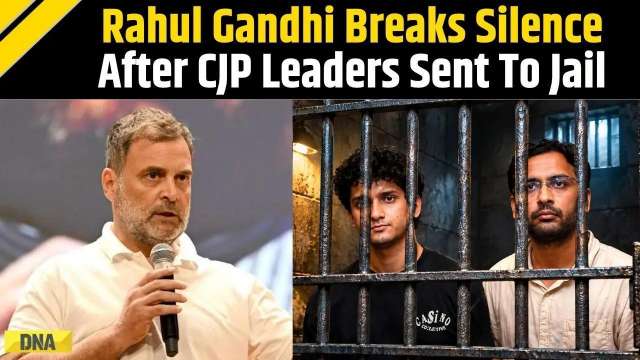 CJP Protest: Congress Rahul Gandhi Backs CJP Leaders Jailed For Tresspassing At Jantar Mantar
 Gold, Silver prices today, October 17, 2026: Check city-wise rates in Delhi, Mumbai, Chennai, Kolkata and more
 Flying Car! Watch video of Tesla's Roadster jump, flip and fly, when will Elon Musk bring it to India?
 Gold, Silver prices today, October 16, 2026: Check city-wise rates in Delhi, Mumbai, Chennai, Kolkata and more
 SEBI Revises Closing Auction Session Rules: What changes from December 7?
 Jio IPO: How Rs 30,213-crore issue could impact Mukesh Ambani's Reliance Jio, India’s digital ecosystem
 Dil Chahta Hai, Cocktail, Dostana: 5 must-watch Bollywood films that celebrate true friendship
 Navratri Day 4: From Shraddha Kapoor, Kriti Sanon, Sanya Malhotra, actresses who embody goddess in blue outfits
 Navratri 2026: From Alia Bhatt to Sara Ali Khan, Shraddha Kapoor, take inspiration from Bollywood actresses to stun everyone in white
 Ranbir Kapoor-Sai Pallavi, Yami Gautam-Addinath Kothare, Rajkummar Rao-Wamiqa Gabbi: 5 fresh on-screen jodis to watch out for in 2026
 OTT Releases This Week (October 5-11): Awarapan 2, Khalifa, Mandaadi; new India movies, shows to watch on Netflix, Prime VideoSupreme Court rejects age-based internet ban for children, says access is fundamental rightThane Shocker: Class 12 students murder schoolmate for gold chain, burn body after taking cues from Drishyam 35 family members found dead in Greater Noida; tea and noodles were their last meal
 IAS officer abuses female colleague, calls het 's*it', triggers backlash in Kashmir
 Rajasthan: 8 killed, 17 injured as bus carrying Khatu Shyam devotees overturns on Delhi-Mumbai Expressway in Kota
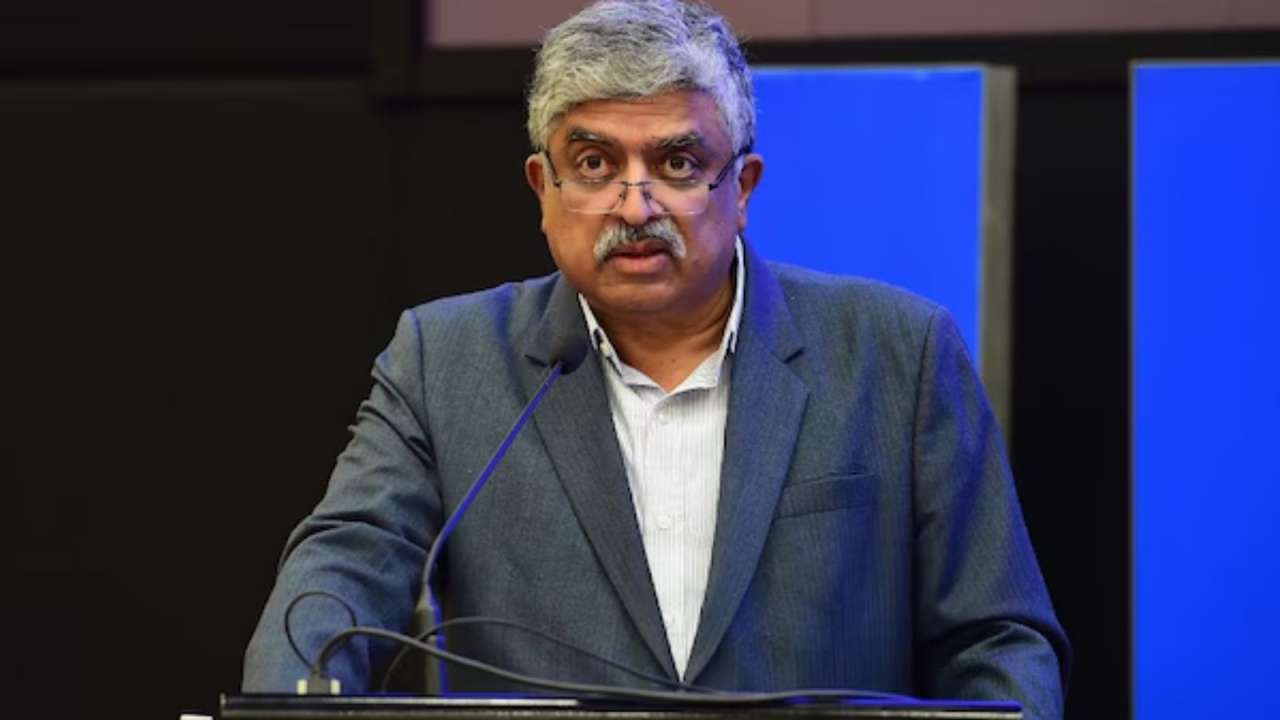 AI-generated question papers for NEET? Nandan Nilekani proposes novel idea for stopping paper leak
 Third Language Row: SC extends relaxation to Class 6 students, asks CBSE to grant exemption, here's what it means
 NEET PG 2026 Result Out: Check how to download scorecard from natboard.edu.in; Know category-wise cut-off and more
 Five-year BTech programmes? Ex-IIT director makes proposals amid IIT suicide controversy
 CBSE Date Sheet 2027: When will Class 10, 12 timetable be released? Check details here
 After Hyundai, Maruti Suzuki makes cars costlier ahead of festive season: Check new prices after hike
 Hyundai cars to get costlier from September: Check new prices and reason behind hike
 Why can't consumers choose pure petrol or E10? Centre explains why E20 is now the standard fuel
 Centre claims E20 fuel does not damage engines, cites data from Maruti Suzuki and Hero MotoCorp
 Maruti WagonR Flex Fuel: What’s price of India’s first ethanol car? Specs, mileage, and top features explained
PEOPLE
Sambit Panigrahi simplifies complex HR tech, developing innovative solutions like Setup Extractor and researching cost reduction, while exploring future HR applications.

Updated : Jul 05, 2025, 04:08 PM IST

















According to Gartner, nearly half of all HR leaders (48%) plan to increase their HR technology budgets in 2024. Meanwhile, Deloitte’s 2025 report emphasizes that automation and AI are emerging as key priorities in HR technology strategies.
Today, digital transformation is at the forefront of the HR agenda. Manual work is becoming a thing of the past, as companies invest in HR information systems and cloud-based HCM platforms. Artificial intelligence is increasingly being applied to recruitment, and enterprise level chatbots are becoming more common. Yet this progress has brought a new challenge. The systems have become increasingly complex and difficult to manage. Many of these technologies are so intricate that even experienced HR leaders struggle to manage them effectively.
At the root of this complexity lies a central question: how can HR systems be simplified without compromising performance? For Sambit Panigrahi, a Senior HR Technology Analyst based in Miami, this question has shaped his entire professional journey.
Currently working in VITAS Healthcare, the largest hospice and palliative care organization in the U.S., Sambit has been at the forefront of efforts to introduce modernization in the manner in which large organizations support and take care of employees. Having successfully overseen the implementation and rollout of next generation employee management systems for organizations with over 50,000 employees, Sambit has played key roles in integrating disparate systems and procedures across industries like healthcare, insurance, and financial services, especially during major transitions like mergers and technology upgrades. What sets him apart is his focus on people; he makes sure that these changes are not only technically sound but also easy and hassle-free for the staff members who rely on them on a daily basis.
One of Sambit’s most impactful contributions came during his time at Deloitte Consulting, where he engineered a tool to solve a common problem in large scale cloud HCM implementations. It is called the Setup Extractor. What is it used for? In Oracle HCM Cloud deployments, HR and IT teams often struggle to manually track configuration setting changes across development, testing, and production at the same time. For the functional consultants and engineers working on large-scale software projects, not having a simple way of comparing technical environments was a constant point of frustration. The result? Delays, interminable cycles of testing, and dissatisfied clients.
This tool was built using reporting technologies (BI Publishers and XML). It helps extract, version, and document configuration setups. It improves traceability, reduces errors, and cuts down on manual work. The Setup Extractor reduced migration related errors by 75 percent, cut deployment time by 40 percent, and has been adopted across multiple enterprise projects within Deloitte. It has significantly improved both implementation quality and client satisfaction at Deloitte.
“There’s a unique satisfaction in seeing a well-crafted strategy come to life, in the seamless functioning of a complex solution,” says Sambit. “And you can actually see how it makes a positive impact on employees’ day-to-day work.”
HR processes can be costly, labor intensive, and often lack visibility across the organization. With the economy under pressure, prices going up, and uncertainty around the world, HR leaders are being asked to do more with fewer resources than ever before. Drawing on decades of hands-on experience with complex HR solutions for various industries, Sambit authored the article “Driving Organizational Cost Reduction through ERP Cloud Solutions: Strategies and Outcomes,” published in The American Journal of Engineering and Technology.
The paper explains how smart HR systems reduce costs and boost efficiency, helping companies grow in a digital world. The article details how the use of automated tools, centralization of HR systems, improved reporting, and streamlining of HR processes can reduce errors, save time, improve operations, and allow businesses to be more flexible in handling employees. These strategies are already helping companies reduce overhead, improve workforce effectiveness, and move toward a more digital, scalable future.
“Cost optimization in HR does not simply mean cutting headcount or freezing hiring,” Sambit says. “It requires rethinking how resources are distributed across the organization.”
Sambit’s passion for building better systems extends well beyond his day job. In recognition of his contributions to the field, Sambit was invited to join the Hackathon Raptors Association as a Fellow Member. It’s a selective global network of technology experts and innovators from leading companies, including FAANG and the Fortune 100. Fellowship status is awarded only to professionals who have demonstrated a significant and measurable impact in their domain.
Through this platform, he collaborates on next generation HR solutions, from AI driven onboarding systems to predictive attrition tools. He runs hackathons, leads tech workshops, and moderates panels to help HR teams bridge critical knowledge gaps.
“You can only see so far when you're limited to one environment,” Sambit says. “But when you connect with people from different fields, the possibilities multiply.”
Sambit believes that real innovation never stays behind the office door. Rather, such platforms provide access to collaborate with new minds, connect with varied ideas, and co-develop solutions that make businesses future-proof. He emphasizes that most forward-looking ideas arise out of such collaborative spaces -ones difficult to discover working in silos within one organization.
HR today faces a set of urgent challenges: increasing complexity in technology, rising operational costs, low transparency, and a lack of technical capability among practitioners. The future of HR highly depends on a number of factors: embracing digital tools with purpose, building data driven cultures, reskilling teams, and keeping employee experience at the center of every decision. Sambit Panigrahi is building practical, forward-looking solutions to each of these.
But he’s not stopping there. Currently, he is exploring how virtual reality can be applied to HR workflows — with the goal of building systems that do not replace people but help them unlock their full potential. One promising example is VR onboarding, which can immerse new hires in real-time, interactive sessions orienting them to company culture, tools, and automated workflows from day one, wherever they are in the world. He aims to create tools that allow work to become more intuitive and more human-oriented.
“I believe in people’s potential, and that’s what drives me to create systems that help them grow, succeed, and truly thrive,” says Sambit Panigrahi.