 Atlee shares emotional note for wife Priya on their 12th wedding anniversary: 'You turned a boy into a gentleman'
 Ramayana box office collection day 5: Ranbir Kapoor, Yash film smashes century on Monday, mints Rs 650 crore
 SKY is back! After missing Ranji Trophy, Suryakumar Yadav gets Mumbai captaincy for Syed Mushtaq Ali Trophy
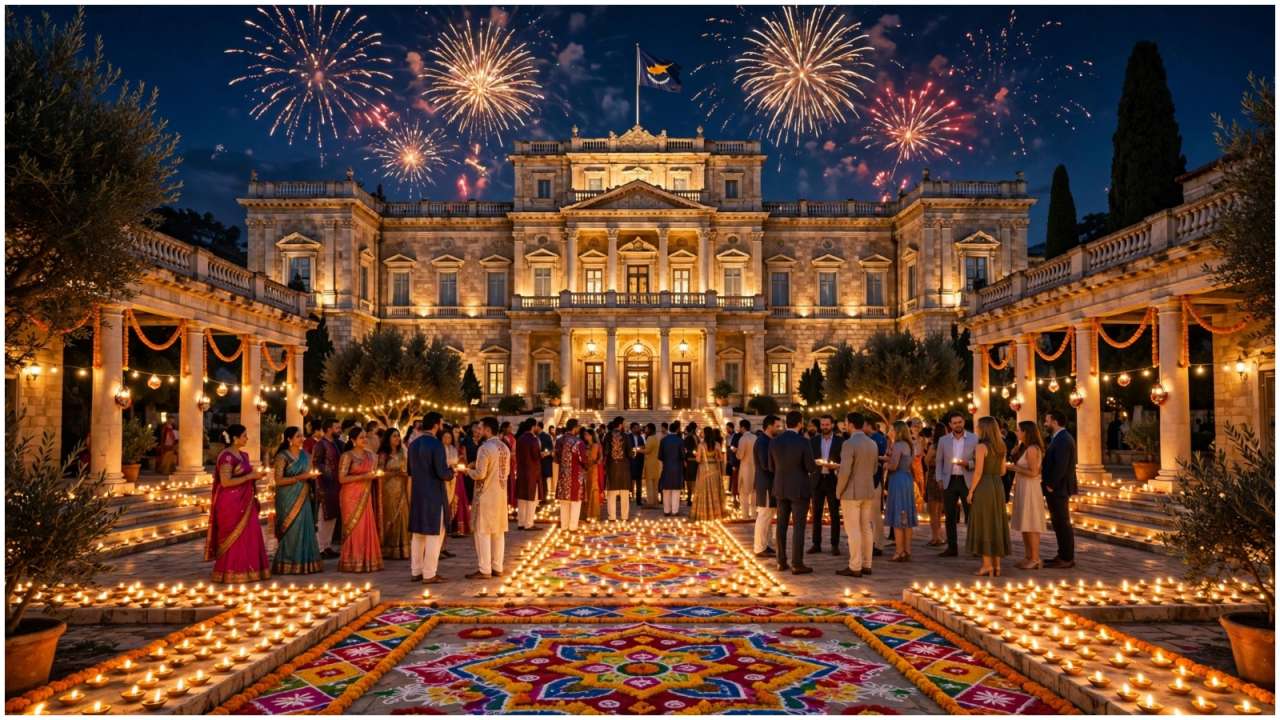 Diwali comes to the Presidential Palace in Cyprus for the first time ever as 'Cyprus Glows' celebrates India–Cyprus friendship
 IND vs NZ, 3rd ODI: Predicted Playing XI, pitch report, weather update and all you need to know
 'Bursting firecrackers cures diseases', says Kolkata's BJP MLA
 Mumbai bans rockets and aerial firecrackers till November 25 after 137 fire incidents on Diwali
 Who is Paresh Ram Das? TMC MLA arrested at Kolkata airport in rape case
 1.27 crore Hindu voters missing from UP rolls? Yogi takes fresh swipe at Opposition
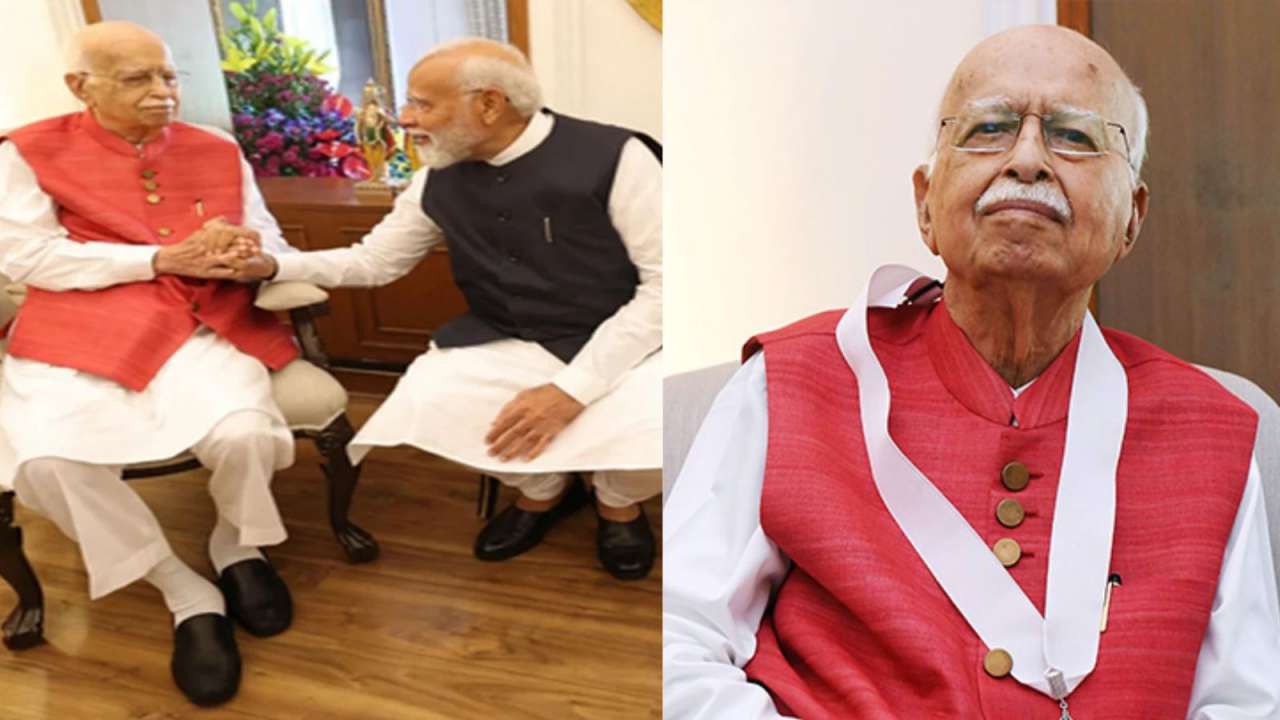 Lal Krishna Advani Turns 100: Know about his net worth and source of incomeDiwali comes to the Presidential Palace in Cyprus for the first time ever as 'Cyprus Glows' celebrates India–Cyprus friendship
 PM Modi talks to Ukrainian President Zelenskyy, discusses how to end war
 China breaks silence on Nvidia CEO Jensen Huang spy allegations: What did Beijing say?
 ‘I hope I go to heaven’: Trump’s remark on hating his enemies in CBS interview draws attention
 Not Delhi: This Indian city is world's most polluted after Diwali with AQI 868; 93 Indian cities in top 100
 Born in Pakistan, praised Jinnah, abandoned by party: The untold story of LK Advani at 100
 Delhi AQI at 370, 1,000 or even 2,000 after Diwali? Why pollution readings show wildly different numbers
 New Yalta After US Midterm? China plans Trump-Putin talks as Ukraine raises alarm over being left out
 New 26/11 Threat? Is Hafiz Saeed's LeT getting maritime training near Karachi to target India?
 Gold Hits Rs 1.46 Lakh Per 10 Grams On Dhanteras: Check 18K, 22K and 24K gold rates in Delhi, Mumbai, Chennai, Kolkata Atlee shares emotional note for wife Priya on their 12th wedding anniversary: 'You turned a boy into a gentleman'Ramayana box office collection day 5: Ranbir Kapoor, Yash film smashes century on Monday, mints Rs 650 crore
 Amitabh Bachchan behind bulletproof glass reflects failure of PM Modi and Amit Shah, says Congress
 Why is Mammootty being criticised for meeting BJP leader Gopalakrishnan at his Thrissur home?
 Guru Randhawa takes Punjabi pop to Electric Daisy Carnival as he joins Steve Aoki to unveil Sirra remix
 Rupee climbs to 7-month high, gains 93.70 against US dollar in early trade
 Dhanteras 2026: Are banks open or closed on November 6? Check RBI holiday list
 Why did Sensex surge over 2,000 points, Nifty rally 576 points today?
 Diwali Muhurat Trading 2026: What investors need to know about date, timings and settlement
 Gold, Silver prices today, November 5, 2026: Check city-wise rates in Delhi, Mumbai, Chennai, Kolkata and moreSKY is back! After missing Ranji Trophy, Suryakumar Yadav gets Mumbai captaincy for Syed Mushtaq Ali TrophyIND vs NZ, 3rd ODI: Predicted Playing XI, pitch report, weather update and all you need to know
 What did Virat Kohli tell Kane Williamson before retirement? Former NZ captain reveals
 India to split coaching staff after 3rd ODI vs New Zealand: Who is going where?
 Kavya Maran Wedding: Rajinikanth, MK Stalin, Udhayanidhi head to Greece to attend SHR owner, Anirudh's marriage ceremony
 Bangladesh News: 'Fugitive Terr*rist...' Dhaka Slams Hasina's Passport Demand, Calls For Extradition
 Congress vs PM Modi Row: 'Jhola-Picking-Up Time' Remark, Bastar Address & Political Reactions
 Nvidia Scandal: The Megaspeed Connection, Alice Huang Ties & Jensen Huang’s Affair
 US MidTerm Elections: How Trump's Defeat Could Impact Pakistan? | Democrats Vs Republicans | India
 Agniveer News: '2 Year Extension...' Army's Major Relief For Agniveers; CDS Subramani's Full Speech
LIFESTYLE
Cement - the image that comes to mind at the word is of a dark, drab, industrial material that's used to construct buildings and bridges, but must be covered up with a coat of paint. Well, looking at the designer lifestyle products - all fashioned in concrete - it's time, perhaps, to amend that impression, says Gargi Gupta

Updated : Dec 05, 2017, 01:57 PM IST
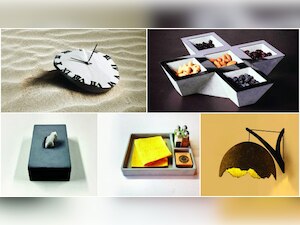
















Cement manufacturer, Dalmia Bharat, launched a range of 50 handmade designer products — jewellery, kitchenware and living room knick-knacks, lamps, clocks, furniture, etc, late last month under the 'Craft Béton' label, 'béton' being the French word for concrete. The company's objective, in the words of Sundeep Kumar, executive director, corporate affairs and communications, was "to change the perception of cement as an old-world product, to make it exciting".
Chic and contemporary, these are pieces of functional art that play up the grey colour, and raw, uneven texture of cement as an essential part of its appeal. They have been designed by four designers/artists, two Indian and two international, chosen by the company on the basis of proposals that it had invited about a year ago.
"The beauty of cement," says Kumar, "is that unlike other materials, you can mould it by hand. It's also very strong and bonds very well with other materials." Even so, it took the designers - Iti Tyagi and Somesh Singh from Delhi, Polish sculptor Miroslaw Baca and Mexican designer Alan Sagar - close to a year to find out "what can be done with it, and how to do it". "Grey is my favourite colour. It's sophisticated, it's timeless — it's the new black, and it goes very well by other colours, fuschia for example," says Tyagi.
GoMaads, a Delhi-based designer label started four years ago by three product designers and architects, could be called the first movers in the area of designing concrete products. The idea grew out of their fascination with exposed concrete — which developed after seeing the raw beauty of the buildings of Le Corbusier, Louis Kahn and others in Europe. GoMaads does a range of home products — clocks, organisers, lights, platters, paperweights, ashtrays, etc, and has expanded to lights and is working on furniture ideas as well. But it's taken them a long time to convince their clients. "They wanted bling, they wanted colour. Some of them even said, 'Yeh purana ho gaya hai kya (Is this old)?'" says Malavika Singh Gupta, one of the founders.
General opinion has changed a lot these days, and Gupta associates it with the fact that the world is now moving to minimalism, the zen approach to things. "Cement has a timeless beauty, that can never go out of trend. And the textures - from the same bag of cement, you can create two very different surfaces, thanks to the air bubbles and lines. We used to worry about this earlier, thinking of it as a limitation. But it is actually the strength of cement — no two pieces are the same."
Bangalore-based product designer Jenny Pinto has come up with Wabi Sabi, a range of lamps made of cement mixed with different kinds of fibre. "It's an extension of the work that I had been doing with handmade paper," says Pinto. Fusing cement with fibre also helps make Pinto's Wabi Sabi lamps far lighter. Cement, she says, came closest to the aesthetic of paper — minimal, very Japanese. In fact, Wabi Sabi is the Japanese philosophy that advocates an appreciation for imperfect aesthetics.