 IND vs NZ 4th ODI: Virat Kohli's calm act goes viral after Gurnoor Brar clashes with Tim Seifert, Watch video
 Shanaya Kapoor delivers a winning performance in ‘Student of the Year: After Dark’, a suspense thriller packed with twists!
 From cleaning toilets to $4.5 trillion empire: Who is Jensen Huang? His Nvidia exit, China spy controversy
 Is PM Modi tapping Rahul Gandhi's phone? Congress MP renews open debate challenge
 From Diyas to a #DiwaliHug: How Help2Live Brought Diwali to Cyprus’s Presidential Palace for the First TimeIs PM Modi tapping Rahul Gandhi's phone? Congress MP renews open debate challenge
 Chhath Puja 2026: Delhi traffic police issues advisory, check restrictions, diversions and more
 ‘Which judges favour BJP and TMC?’ Calcutta HC asks Abhishek Banerjee to submit names
 Manipur firing: Woman killed, two men wounded in gun attack at Kangpokpi village
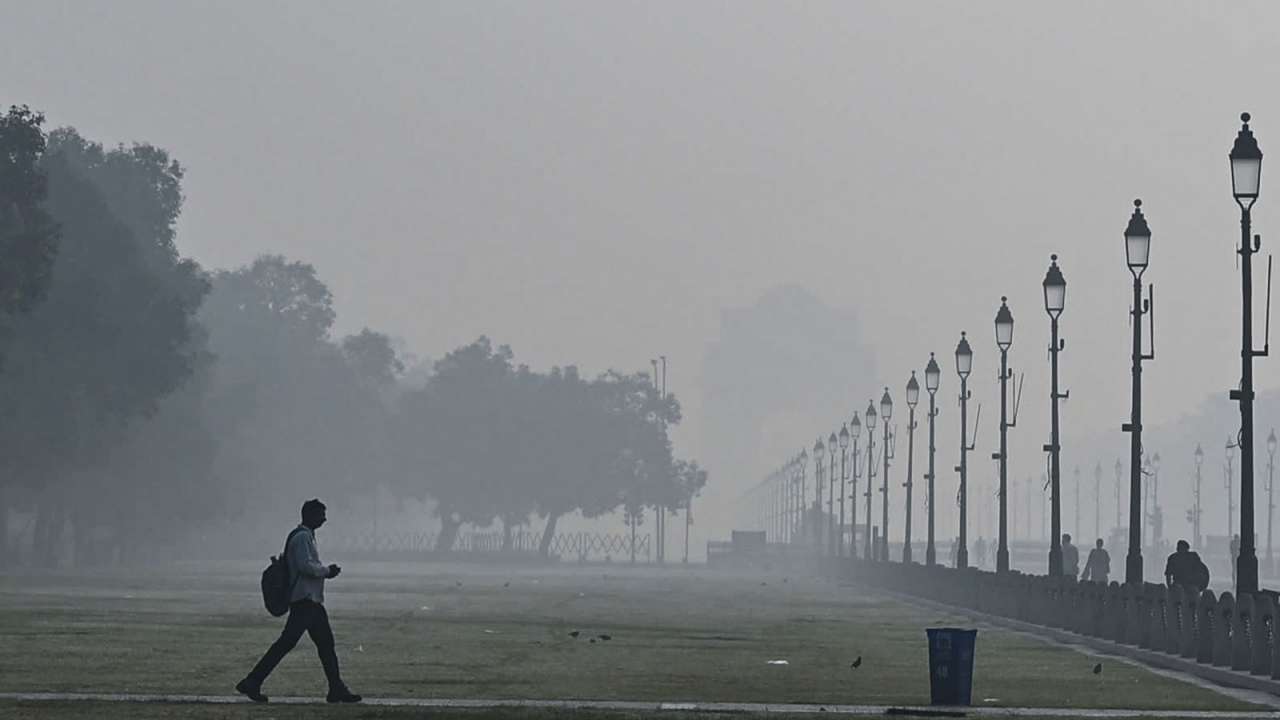 Delhi-NCR's air turns alarming as AQI hits 492, thick smoke chokes city, reduces visibilityFrom cleaning toilets to $4.5 trillion empire: Who is Jensen Huang? His Nvidia exit, China spy controversy
 Nvidia CEO's Pathetic Final Hours In Office: Shattered Jensen Huang turns penitent, says, 'I am a piece of sh*t'
 Will Nvidia employees bring back ex-Boss Jensen Huang after exit over affairs?
 Ex-Nvidia chief Jensen Huang faces fresh claim of third affair with another employee: Report
 'A Legend Replaces A Legend': Donald Trump backs Tim Cook to replace Jensen Huang as Nvidia CEO
 Why does inflation soar to 6.09% despite falling fuel prices, US-Iran war halt? RBI's next move under focus
 UP Elections 2027: Will Asaduddin Owaisi and Chandrashekhar Azad defeat BJP or help Yogi win?
 From Nvidia CEO Jensen Huang to top officials: 5 Alleged Chinese 'honey trap' cases that shocked world
 Brent crude crashes from $115 to $90: Will petrol and diesel prices become cheaper in India?
 Sensex soars 1,300 points, Rs 6 lakh crore added in minutes: 3 BIG reasons behind stock market rallyShanaya Kapoor delivers a winning performance in ‘Student of the Year: After Dark’, a suspense thriller packed with twists!
 'I cannot live without them’: Sharad Kapoor gets emotional as his dogs are shifted to animal welfare centre| Watch
 Maatrubhumi conquers, Military veteran, Shaurya Chakra awardee react to trailer of Salman Khan's action drama
 Exclusive: Salaam Venky, OM producer R Take's Shraddha Agarwal on challenge of keeping slice-of-life genre alive amid big-budget extravaganzas
 Ramayana box office collection Day 8: Despite big drop, Ranbir Kapoor scores his biggest hit, 1st 1000 crore film
 Zee Entertainment announces Rs 600 crore share buyback at Rs 91 per share
 Who may replace Nvidia CEO Jensen Huang? THIS Indian tech executive emerged among top contenders
 When CA Mukesh Jain Tested Kwala Intel: Inside the AI market wizard that money managers now swear by
 Tata Group Power Struggle Intensifies: Noel Tata quits boards of six companies, what next?
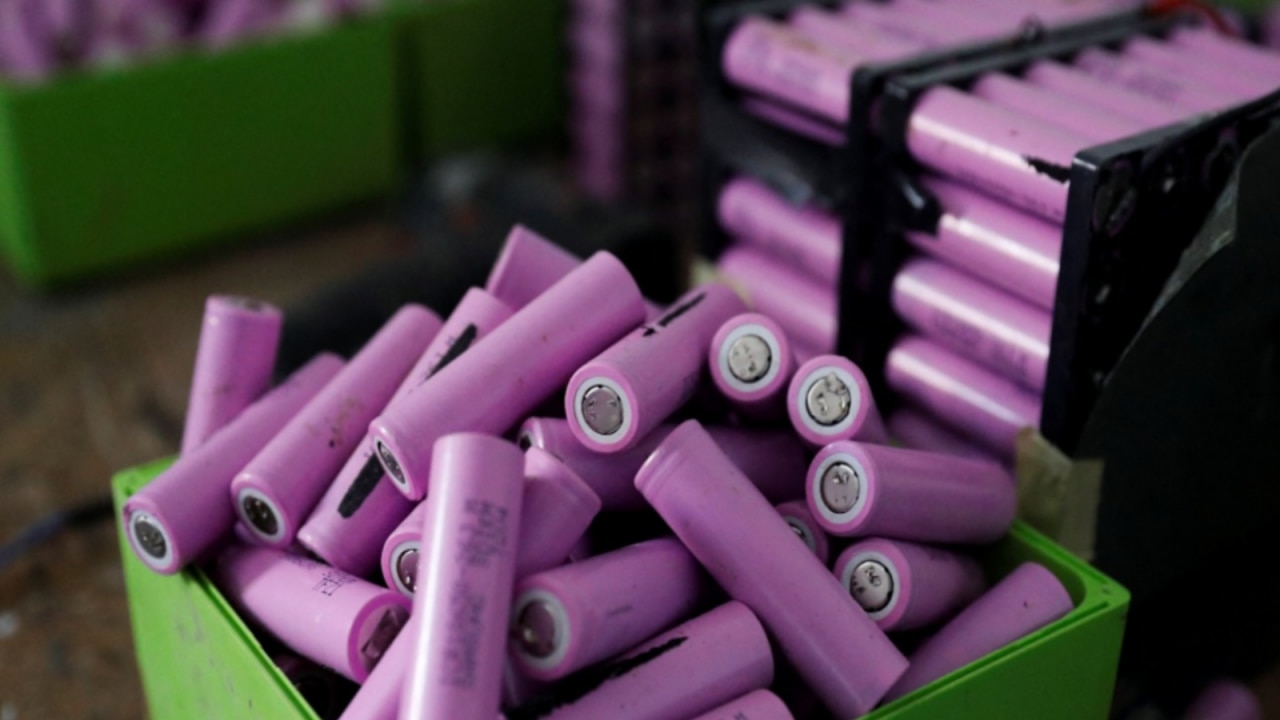 India bans lithium-ion battery waste exports: What's the reason behind the move?IND vs NZ 4th ODI: Virat Kohli's calm act goes viral after Gurnoor Brar clashes with Tim Seifert, Watch video
 IND vs NZ ODI Series: Rohit Sharma's diving catch goes viral after he dismisses Finn Allen for 41, Watch
 Arshdeep Singh and Samreen Kaur take relationship to next level: See engagement pictures
 Akash Ambani's first reaction after Hardik Pandya trade, welcomes Arshdeep Singh to Mumbai Indians
 Hardik Pandya drops first message after joining PBKS goes viral, says 'Sat Sri Akal Punjab'
 Nvidia-Jensen Huang News: 'Would Be An Honor To Hire Him...' Will Musk Save Huang After Resignation
 J&K News: 'Won't Spare You...' 2 Days Before Kulgam Attack, CRPF Got Unexpected Warning By Boy
 J&K News: Two Special Police Officers Who Went Missing In Kishtwar District Found Dead
 Assam Train Accident: 'Break Failure Or Control Loss...' 300 Passengers Escape Death; What Happened?
 Delhi AQI News: Why India’s Official AQI Stops At 500 While Private Apps Show Readings Above 1,500
INDIA
A post card-based health checkup to decrease stress among the state's constables, a simple game for the city's dyslexic children, a mobile device to contain the malaria epidemic, and a toilet system for urban slums of Ahmedabad!

Updated : Dec 20, 2010, 03:57 PM IST

















A post card-based health checkup to decrease stress among the state's constables, a simple game for the city's dyslexic children, a mobile device to contain the malaria epidemic, and a toilet system for urban slums of Ahmedabad!
All these and more solutions were put forth by the invited guests and students of NID, some of which were custom-made for the city in particular, and some for the Indian society in general.
These participants of the 'Vision Plus 2010' seminar presented their primary research and projects on the third and concluding day of the series - on Sunday. The theme for the day was 'cultivating', which revolved around communities, healthcare and mobility aspects.
Moved by the suicides and other stress-related problems of constables, NID student Brajesh Panda came up with a 'low-cost' idea, which would need nothing but a post card and a diary for implementation. He even conducted pilot research in association with the Gujarat police hospital at Shahpur.
Panda recommended the use of a paid post card, addressed to the hospital, to be given to all the constables. They would just have to fill in details like their name, age, rank, tobacco consumption, cholesterol level and eyesight, and post these regularly to the hospital. Through this hassle-free method, the doctors would be able to maintain records of all the constables, and call them for regular check-ups.
Brajesh also came up with an improved version of the police patrol notebook, to make them organized and methodical in performing their duties, ultimately leading to lower mental stress levels. He also suggested the use of some motivational slides, which can be put between the pages of this notebook.
Prof Abir Mullik of Gerogia Tech, USA, discussed the need to implement bathing and toilet infrastructure in urban slums in Vadaj area of the city. He conducted research in Ahmedabad with the help of some NID students, and presented a prototype of such toilets and bathrooms.
Mullik feels that 'Sulabh' hasn't served its purpose, as there is a huge problem of maintenance and hygiene in such public toilet systems. Nearly 54% of urban slums do not have toilets, he said. He even claimed that only 15% of schools in India have toilets.
Dhaval Joshi of Nokia research centre in Bangalore floated the idea of a mobile device that can help doctors and authorities prevent malaria epidemics. The device can be used by doctors and staff members of primary health centres across the state, who can directly communicate information regarding epidemics to the district health officer via custom-made user interface in the device.
Jay Rutherford, professor at the faculty of art and design at Bauhaus University Weimar, spoke about the challenges in creating reader-friendly signs on roads, buildings and across the city.
His topic was 'Way-finding in Ahmedabad', and he was concerned about the language, font size, and color used in signboards across the city, many of which are so cluttered that they hinder the mobility of strangers. He even expressed his concern over the direction boards across the NID campus, calling them 'confusing'.