 Viral video: Manoj Tiwari attacks CJP protest, says 'Gyanesh Kumar ke liye Dhruv Rathee ki...', gets brutally trolled: 'Yeh phir se peeke aaya hai'
 AI-generated question papers for NEET? Nandan Nilekani proposes novel idea for stopping paper leak
 ‘Mahhi Vij ko bhi nikalo’: Bigg Boss 20 viewers demand actress’ eviction after Nakul Dhull-Gullu fight | Video
 ‘My President, My Husband’: Trump’s new Press Secretary’s first briefing goes viral
 How was Hindu migrant worker spared despite insult to Prophet Muhammad in Saudi Arabia?
 Will age impact Rohit Sharma, Virat Kohli's 2027 World Cup selection? BCCI president finally breaks silence
 World Cup hero Yuvraj Singh set to make IPL coaching debut, joins THIS team for 2027 season
 IND vs WI 4th T20I Live Streaming: When and where to watch India vs West Indies match live on Tv and online?
 Former England all-rounder makes big statement on Virat Kohli says, 'He is master of chase'
 IND vs WI 4th T20I: Hyderabad Police roll out major security plan ahead of uppal clash, deploy 2,200 copsViral video: Manoj Tiwari attacks CJP protest, says 'Gyanesh Kumar ke liye Dhruv Rathee ki...', gets brutally trolled: 'Yeh phir se peeke aaya hai'‘Mahhi Vij ko bhi nikalo’: Bigg Boss 20 viewers demand actress’ eviction after Nakul Dhull-Gullu fight | Video
 Viral video: Ravi Kishan brutally trolled for criticising Rahul Gandhi protesting against 'vote chori', netizens say 'he is always high on premium sh*t'
 Viral video: Prakash Raj slams Narendra Modi's BJP for sending CJP's Saurav Das, Ashutosh Ranka to judicial custody: 'Poora desh jantar mantar banega'
 Drishyam 3 box office collection day 12: Ajay Devgn film is unstoppable, crosses Rs 500 crore worldwide
 CJP Protest: Congress Rahul Gandhi Backs CJP Leaders Jailed For Tresspassing At Jantar Mantar
 Delhi Protest: Delhi High Court Bench To Hear Pleas On Protest Regulation & Jantar Mantar Ban
 Pakistan News: 5 Killed, 30 Injured As Rehman Baba Express Derails Near Multan In Pakistan
 CJP Protest: Delhi Police Detains CJP Spokespersons Saurav Das And Ashutosh Ranka At Jantar Mantar
 CJP Protest: 2 FIRs Filed Over INDIA Bloc Leaders March In Delhi; SC To Hear Protesters Plea
 RBL Bank shares crash 8% despite 170% profit jump: Why are investors worried?
 UPI payment charges postponed till Diwali, what does it mean for shops, merchants and customers?
 Retail inflation rises to 5.54% in September: Experts warn of pressure on purchasing power, expect more RBI rate hikes
 Gold, Silver prices today, October 10, 2026: Check city-wise rates in Delhi, Mumbai, Chennai, Kolkata and more
 Reliance Jio IPO: Price Band likely at Rs 1065-1119 per share, issue may open on October 21; check details
 Navratri 2026: From Alia Bhatt to Sara Ali Khan, Shraddha Kapoor, take inspiration from Bollywood actresses to stun everyone in white
 Ranbir Kapoor-Sai Pallavi, Yami Gautam-Addinath Kothare, Rajkummar Rao-Wamiqa Gabbi: 5 fresh on-screen jodis to watch out for in 2026
 OTT Releases This Week (October 5-11): Awarapan 2, Khalifa, Mandaadi; new India movies, shows to watch on Netflix, Prime Video
 OTT Releases This Week (Sept 28 - Oct 4): Dupahiya 2, Pooja Meri Jaan; new movies and shows to watch this Gandhi Jayanti weekend
 From Neeti Mohan, Heer, Sarthak Kalyani; Ahead of Sa Re Ga Ma Pa, 5 musical geniuses championed by AR Rahman
 Mumbai weather update: No relief from heat and humidity, mercury may hit 37°C; AQI ‘poor’
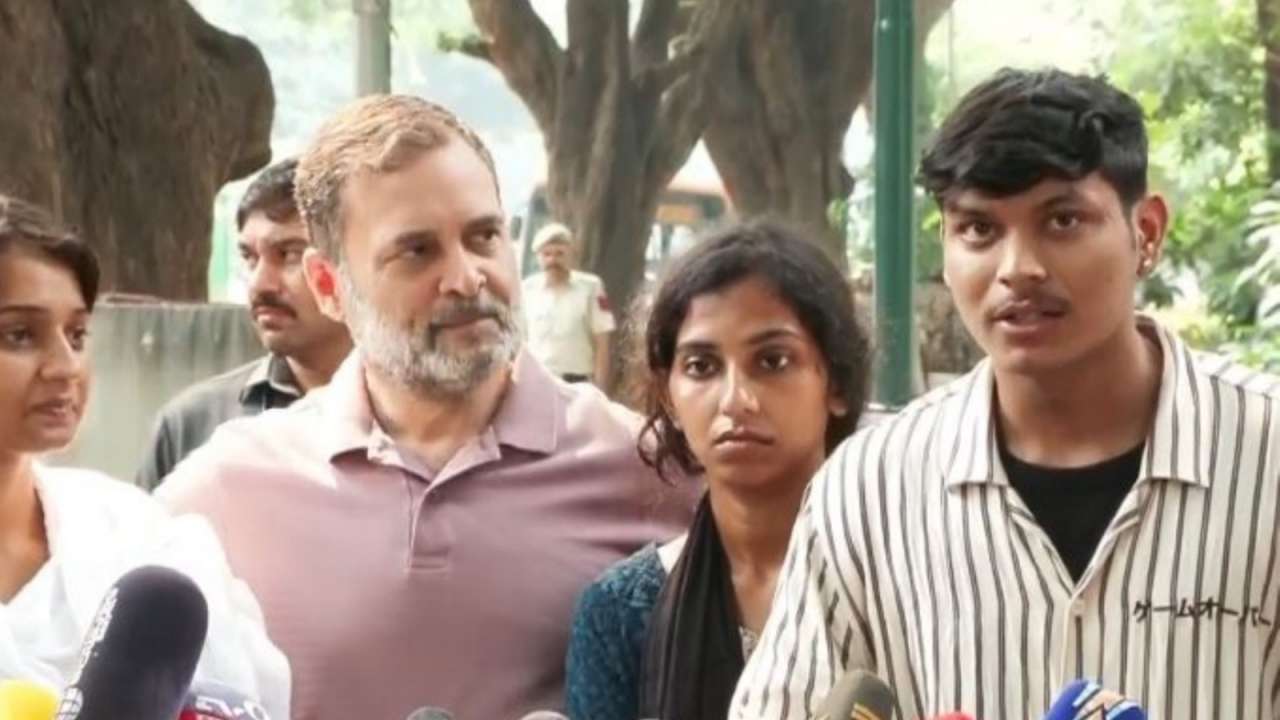 Anti-SIR Protest: Rahul Gandhi meets injured NSUI protesters, accuses cops of beating them, claims woman lost hearing
 Shocking CCTV: Final moments of man who fell from influencer Shraddha Dubey’s apartment
 Who is funding Abhijeet Dipke's CJP? American singer Mary Millben alleges US donor links, backs PM Modi
 Parvinder Singh Jhota murder: Prime accused arrested from Rajasthan in Punjab anti-drug activist’s killingAI-generated question papers for NEET? Nandan Nilekani proposes novel idea for stopping paper leak
 Third Language Row: SC extends relaxation to Class 6 students, asks CBSE to grant exemption, here's what it means
 NEET PG 2026 Result Out: Check how to download scorecard from natboard.edu.in; Know category-wise cut-off and more
 Five-year BTech programmes? Ex-IIT director makes proposals amid IIT suicide controversy
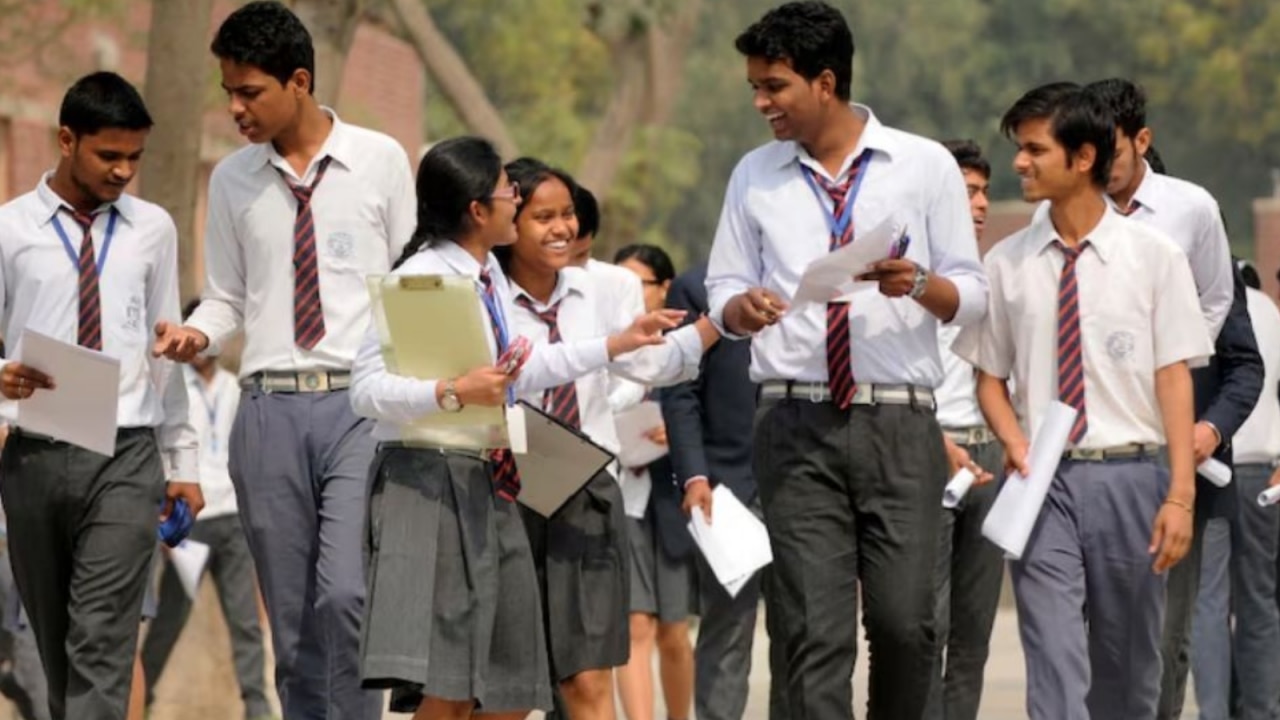 CBSE Date Sheet 2027: When will Class 10, 12 timetable be released? Check details here
 After Hyundai, Maruti Suzuki makes cars costlier ahead of festive season: Check new prices after hike
 Hyundai cars to get costlier from September: Check new prices and reason behind hike
 Why can't consumers choose pure petrol or E10? Centre explains why E20 is now the standard fuel
 Centre claims E20 fuel does not damage engines, cites data from Maruti Suzuki and Hero MotoCorp
 Maruti WagonR Flex Fuel: What’s price of India’s first ethanol car? Specs, mileage, and top features explained
INDIA
The Voyager Targdigrades mission aims to explore how these microscopic creatures survive, reproduce and repair themselves in the harsh environment of space.

Updated : Jun 13, 2025, 04:54 PM IST
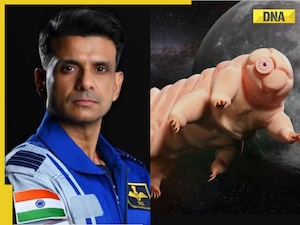



Indian astronaut Shubhanshu Shukla is all set for his two-week journey to the International Space Station (ISS) under the Axiom 4 mission. He will undertake some of the experiments for ISRO along with three other astronauts in his 14-day time in space. One of the most intriguing experiments, known as the Voyager Targdigrades mission, aims to explore how these microscopic creatures survive, reproduce and repair themselves in the harsh environment of space. Besides observing resilient lifeforms, the experiment’s objective is to prepare for the future of human space exploration. If tardigrades thrive in hostile environments, it can revolutionise space medicine, biomaterials and cryopreservation.
What are Tardigrades?
Tardigrades, also known as water bears, are strong aquatic creatures that existed for about 600 million years, surviving Earth’s mass extinction events. Tiny around 0.5mm long, these eight-legged organisms have a claw-like structure and a mouth specialised for extracting nutrients from plant cells, algae and tiny invertebrates. These organisms thrive in extreme environments and weather conditions. They are most commonly found in the thin films of moisture on mosses and lichens, and are also known as ‘moss piglets’.
In recent decades, Tardigrades, first discovered in 1773 by German zoologist Johann August Ephraim Goeze, has gained traction among scientists. Their resilience to extreme conditions surviving temperatures from -272.95°C to 150°C, their survival mechanism, makes tardigrades special. They owe their survival skills to a biological process known as cryptobiosis.
Why Tardigrades are taken to space?
In the Voyager Tardigrades experiment, these eight-legged organisms will be sent to the ISS in their dormant tun state. Scientists will rehydrate and revive them to study how space radiation and microgravity affect their biology, once they are in orbit. The main objective lies in identifying genes and molecular mechanisms which are responsible for tardigrades’ DNA repairing and maintaining function in space. The insights can be helpful for protecting astronauts from radiation during long-duration missions. It also prevents muscle and bone loss in zero gravity. In addition, it can preserve biological materials during extended space travel.
Meanwhile, this is not the first time, Tardigrades are taken to space, nearly 3,000 tardigrades were sent to space aboard the European Space Agency's Foton-M3 mission in 2007. In the experiment, many survived and some even reproduced after returning to Earth.