 Donald Trump vs Netanyahu Over Iran War: Report claims 'shouting match from hell' call
 Why does inflation soar to 6.09% despite falling fuel prices, US-Iran war halt? RBI's next move under focus
 Ramayana box office collection Day 8: Despite big drop, Ranbir Kapoor scores his biggest hit, 1st 1000 crore film
 Beyond Beauty Trends: Why Doctor-Led Indian Skincare Brand Episenz Is Advocating Science Over Hype
 TestGrid bets on AI agents to cut the cost of maintaining software tests
 Maharashtra Shocker: 20-year-old woman molested on local train, pushed onto tracks, loses arm
 Owaisi-Azad join hands in UP, picks Chandra Shekhar Azad as CM face to consolidate Dalit-Muslim votes against BJP
 Arvind Kejriwal after Tiger Shroff? Bishnoi gang threatens him, demands ransom of Rs 7 crore, what will Rekha Gupta govt do?
 Abhishek Banerjee attacks Bengal govt after anti-encroachment action near house: 'You cannot bulldoze my voice'
 Jammu and Kashmir Horror: Bullet-riddled bodies of two missing SPOs, who had gone missing on duty, found in KishtwarDonald Trump vs Netanyahu Over Iran War: Report claims 'shouting match from hell' call
 Who is Kang Wei? Alice Huang's husband who introduced her to Nvidia CEO Jensen Huang
 Bad News For H-1B Holders? US may remove deference for visa extensions; what it means for Indian employees?
 Jensen Huang's future at Nvidia in doubt as board weighs ouster over second affair report
 Russia-Ukraine War To End? Trump envoys to meet Putin as US pushes peace deal: ReportsWhy does inflation soar to 6.09% despite falling fuel prices, US-Iran war halt? RBI's next move under focus
 UP Elections 2027: Will Asaduddin Owaisi and Chandrashekhar Azad defeat BJP or help Yogi win?
 From Nvidia CEO Jensen Huang to top officials: 5 Alleged Chinese 'honey trap' cases that shocked world
 Brent crude crashes from $115 to $90: Will petrol and diesel prices become cheaper in India?
 Sensex soars 1,300 points, Rs 6 lakh crore added in minutes: 3 BIG reasons behind stock market rallyRamayana box office collection Day 8: Despite big drop, Ranbir Kapoor scores his biggest hit, 1st 1000 crore film
 Viral video: Jackie Shroff dodges reacting to Tiger Shroff's firing incident? His mute reaction leaves netizens puzzled
 Anubhav Sinha 'jealous' of Ramayana? Director hopes film 'will no longer be gladiators', netizens brutally trolled him: 'You should stop making movies'
 Kangana Ranaut ATTACKS Sonia Gandhi, calls Congress leader 'billionaire Italian widow' seeking sympathy, netizens brutally troll actress
 Kareena Kapoor lands in major trouble, actress hurts Islamic sentiments by wearing royal pendent with Quranic verse
 Who may replace Nvidia CEO Jensen Huang? THIS Indian tech executive emerged among top contenders
 When CA Mukesh Jain Tested Kwala Intel: Inside the AI market wizard that money managers now swear by
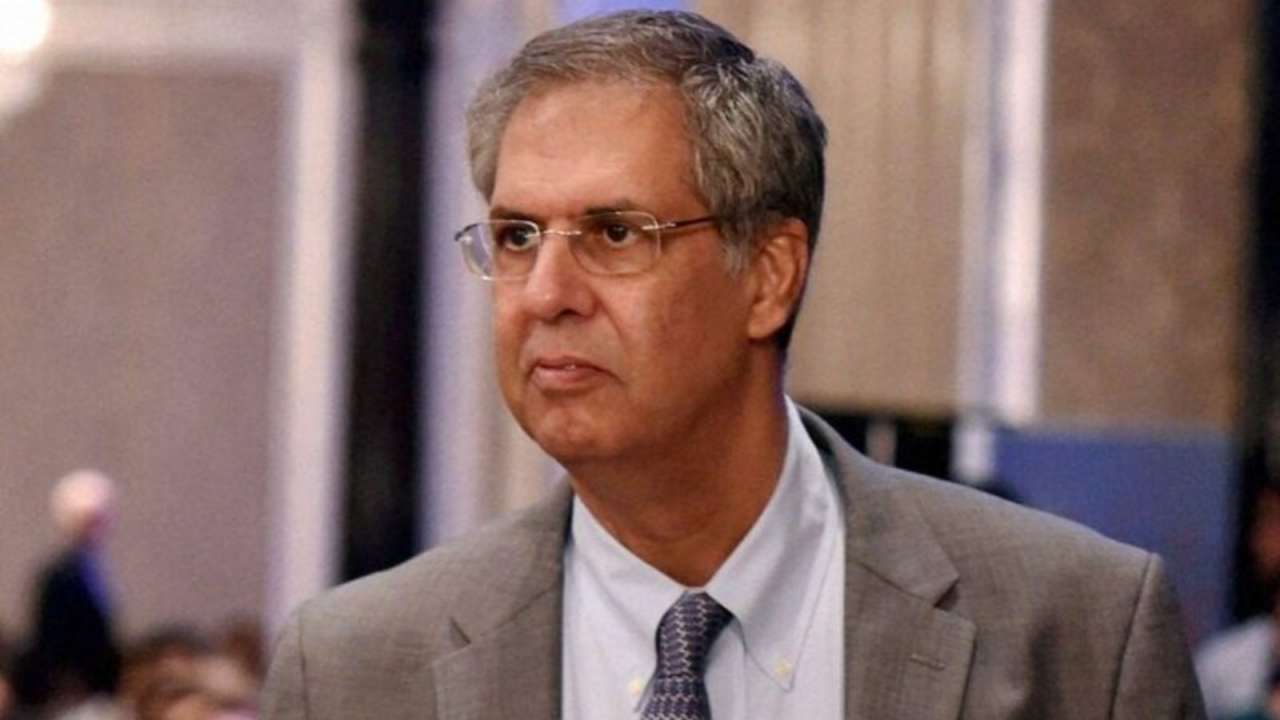 Tata Group Power Struggle Intensifies: Noel Tata quits boards of six companies, what next?
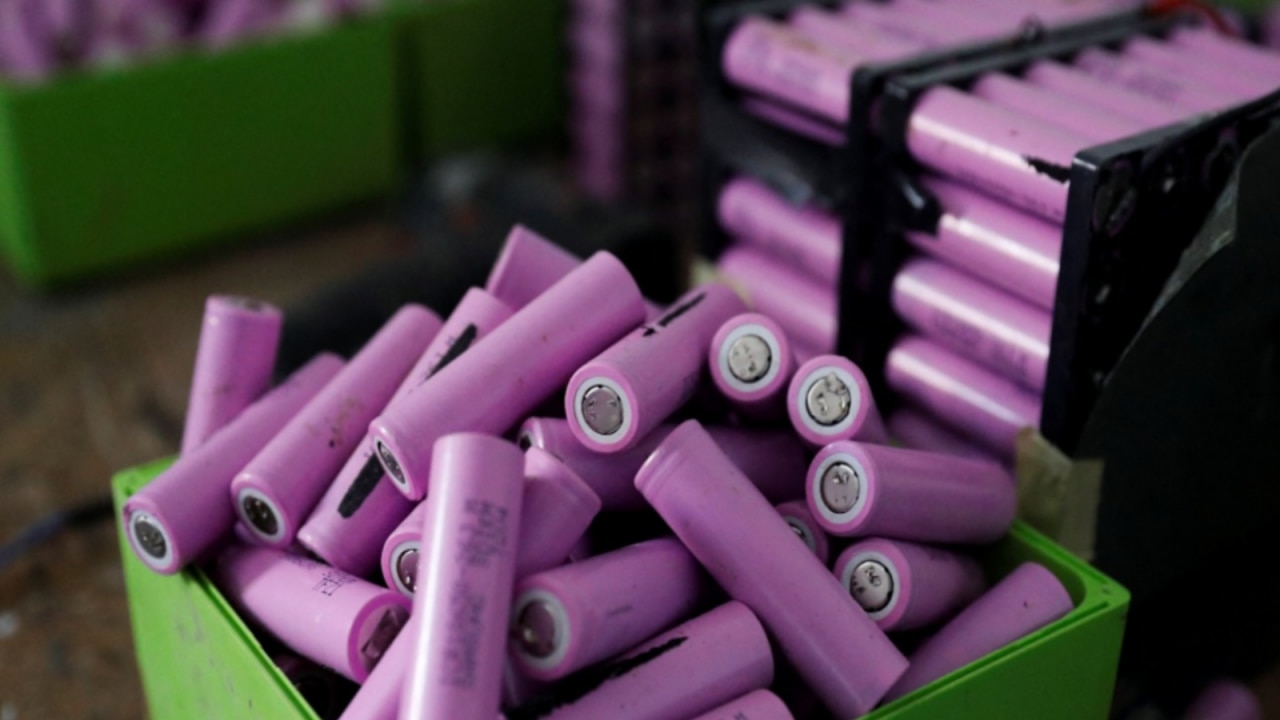 India bans lithium-ion battery waste exports: What's the reason behind the move?
 Why Mother Dairy, Amul to hike milk prices in Delhi-NCR from November 12?
 Arshdeep Singh and Samreen Kaur take relationship to next level: See engagement pictures
 Akash Ambani's first reaction after Hardik Pandya trade, welcomes Arshdeep Singh to Mumbai Indians
 Hardik Pandya drops first message after joining PBKS goes viral, says 'Sat Sri Akal Punjab'
 IPL 2027 trades: Full list of players who have switched teams, Hardik-Arshdeep deal included
 Irfan Pathan makes big statement on Arshdeep Singh's trade to MI, says 'Makes Mumbai Indians a stronger side'
 J&K News: Two Special Police Officers Who Went Missing In Kishtwar District Found Dead
 Assam Train Accident: 'Break Failure Or Control Loss...' 300 Passengers Escape Death; What Happened?
 Delhi AQI News: Why India’s Official AQI Stops At 500 While Private Apps Show Readings Above 1,500
 Nvidia Scandal Explained: Jensen Huang, Megaspeed Allegations & Impact On AI Stocks & GPUsMother Dairy Milk Price Revision 2026: Check New Rates For Full Cream, Toned & Cow Milk | Amul Milk
BUSINESS
They rated India too low despite fundamental improvement compared to China. The rating agencies have been inconsistent in their treatment of China and India: Arvind Subramanian

Updated : Mar 25, 2018, 05:13 AM IST



India's chief economic adviser (CEA) Arvind Subramanian has said that international rating agencies are biased and have almost lost their credibility, especially regarding India.
"They rated India too low despite fundamental improvement compared to China. The rating agencies have been inconsistent in their treatment of China and India," Subramanian said without naming any agencies.
International rating agencies have given India a BBB- rating, just above the junk grade and the lowest among investment grade ratings despite improvements in economic fundamentals like inflation, growth, and current account performance. But the same time, China's rating has upgraded to AA-, even its fundamentals have not supported it.
Subramanian said in the US financial crisis, questions were raised about their role in certifying as AAA bundles of mortgage-backed securities that had toxic underlying assets.
Further, "their value has been questioned in light of their failure to provide warnings in advance of financial crises", he said.
Often rating downgrade has occurred post facto, a case of closing the stable doors after the horses have bolted.
Singapore-based Thomas Labbe, a fixed income market expert with Bloomberg who had worked with Morgan Stanley, has said because the raters tend to focus on long-term trends, their verdicts on creditworthiness may lag behind developments.
He explained that how independent models can be especially useful in countries like India where market priced credit risk differs from ratings. He has taken the example of a 10-year Indian government bond that matures in 2027 yielded 7.45% as of March 10. He analysed yield and spread function in terms of the yield into a US-dollar-denominated equivalent bond. He picked up the March 10th 2017 data of the Indian bond which traded at a 69-basis-point spread over the US Treasury bond. Labbe has compared the similar Malaysian bond which matures in 2027 too and shows that Malaysian bond's yield was only 4.29%. He also converted the return into US dollar and found 'a spread of 64 basis points over the Treasury bond'. In spite of the solid performance, "India is rated Baa3, BBB-, and BBB- by the three main rating companies" and "Malaysia is rated A3, A-, and A-."